Discover the Enchanting World of Sitar Music at The Pink Lotus Academia

Introduction

Embarking on a journey can be an exciting but also nerve-wracking experience. Pre-flight jitters are common, and finding ways to calm your nerves can make all the difference. In this article, we share seven essential yoga poses that will help you relax, breathe easier, and enjoy a more peaceful flight.

1. Seated Forward Bend (Paschimottanasana)

Benefits: This pose helps to calm the mind, relieve stress, and stretch the entire back body.

Instructions:

  1. Sit on your yoga mat with your legs extended in front of you and your spine straight.
  2. Inhale and raise your arms above your head.
  3. Exhale and fold forward from your hips, reaching for your feet or shins.
  4. Relax your head and neck, and hold the pose for five breaths.

2. Child’s Pose (Balasana)

Benefits: A grounding pose, Child’s Pose relaxes the body and mind while gently stretching the hips, thighs, and lower back.

Instructions:

  1. Start on your hands and knees, with your knees hip-width apart and your big toes touching.
  2. Sit back on your heels, and as you exhale, lower your forehead to the mat.
  3. Extend your arms in front of you or alongside your body, palms facing up.
  4. Hold the pose for five breaths, feeling your spine lengthen and your stress melt away.

3. Cat-Cow Pose (Marjaryasana-Bitilasana)

Benefits: This pose sequence increases spinal flexibility and promotes relaxation.

Instructions:

  1. Start on your hands and knees, with your wrists directly under your shoulders and your knees under your hips.
  2. Inhale and arch your back, lifting your chest and tailbone towards the ceiling (Cow Pose).
  3. Exhale and round your spine, tucking your tailbone and drawing your chin towards your chest (Cat Pose).
  4. Continue alternating between Cat and Cow Pose for five breaths.

4. Seated Spinal Twist (Ardha Matsyendrasana)

Benefits: Twisting poses help to relieve tension in the spine and stimulate the digestive system.

Instructions:

  1. Sit on your mat with your legs extended in front of you.
  2. Bend your right knee, placing your right foot on the outside of your left thigh.
  3. Inhale and lengthen your spine, then exhale and twist your torso to the right.
  4. Place your right hand behind you for support, and your left elbow on the outside of your right knee.
  5. Hold for five breaths, then switch sides.

5. Legs-Up-The-Wall Pose (Viparita Karani)

Benefits: This restorative pose helps to alleviate anxiety, lower blood pressure, and refresh tired legs.

Instructions:

  1. Place a folded blanket or bolster near a wall.
  2. Sit sideways with your right hip against the wall.
  3. Gently swing your legs up onto the wall as you lie down on your back.
  4. Adjust your hips on the blanket or bolster, ensuring your lower back is supported.
  5. Relax your arms by your sides, palms facing up, and breathe deeply for five to ten minutes.

6. Reclining Bound Angle Pose (Supta Baddha Konasana)

Benefits: This pose opens the hips, relaxes the nervous system, and encourages deep breathing.

Instructions:

  1. Lie on your back with your knees bent and feet flat on the

    floor. 2. Bring the soles of your feet together and allow your knees to fall open to the sides.

    1. Place your hands on your lower abdomen or rest them by your sides, palms facing up.
    2. Close your eyes and take slow, deep breaths, allowing your body to relax into the pose. Hold for five to ten breaths.
     

    7. Corpse Pose (Savasana)

    Benefits: Savasana is the ultimate relaxation pose, helping to release tension and quiet the mind.

    Instructions:

 
    1. Lie on your back with your legs extended and slightly apart.
    2. Allow your feet to fall open to the sides and relax your arms by your sides, palms facing up.
    3. Close your eyes and take slow, deep breaths, focusing on the rise and fall of your abdomen.
    4. Stay in Savasana for at least five minutes, allowing your body and mind to fully relax.
 

Instagram:  @thepinklotusacademia

Facebook: @thepinklotusacademia

Faculty: Kaavita Das
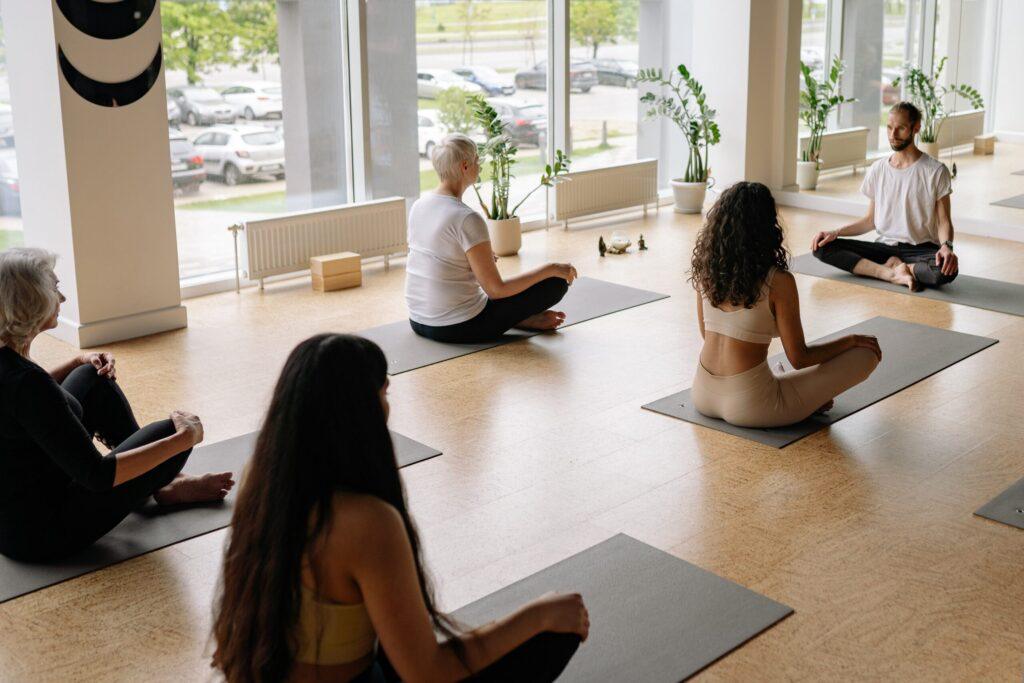
Yoga Class in aesthetic studio

Yoga teacher training in India is the most authentic, respected, and transformational way to become a certified yoga professional. As the birthplace of yoga, India offers unmatched spiritual depth, traditional wisdom, and professional credibility. If you’re planning to pursue yoga teacher training in India in 2026, this guide will walk you through every step with clarity and confidence.

Whether your goal is to teach worldwide, deepen your practice, or start a wellness career, yoga teacher training in India gives you the strongest foundation.


What Is Yoga Teacher Training in India

Yoga teacher training in India is a structured professional program that trains students in classical yoga practice, philosophy, anatomy, teaching methods, and lifestyle discipline.

Meaning and Purpose of YTT

The purpose of yoga teacher training is not only to produce teachers but to create balanced, conscious individuals who can share authentic yoga knowledge.

Global Recognition

Certifications from India are respected worldwide, especially when aligned with Yoga Alliance standards.


Why India Is the Best Place to Learn Yoga

India is not just a location. It’s the soul of yoga.

Spiritual Roots

Yoga originated in India over 5,000 years ago. Learning yoga here connects you directly to its source.

Cultural Depth

From temples to meditation traditions, India offers immersive learning beyond textbooks.


Types of Yoga Teacher Training Courses

200 Hour Yoga Teacher Training

This is the foundation level and the most popular choice for beginners.

300 Hour Yoga Teacher Training

Advanced learning for deeper mastery.

500 Hour Yoga Teacher Training

A combination of both for complete expertise.

Each level strengthens your authority in yoga teacher training in India.


Certification Bodies and Accreditation

Yoga Alliance

Yoga Alliance is the most recognized international body. Learn more here:
👉 https://www.yogaalliance.org

Indian Certification Boards

Government and traditional institutions also offer recognition.


Eligibility Criteria

Anyone with interest, discipline, and basic physical ability can join yoga teacher training in India. Age, background, and profession do not restrict entry.


Curriculum Structure

A standard yoga teacher training curriculum includes:

  • Asana practice

  • Pranayama

  • Meditation

  • Anatomy

  • Yoga philosophy

  • Teaching methodology

  • Practicum

This ensures balanced theoretical and practical knowledge.


Daily Schedule in YTT

A typical day includes:

TimeActivity
6:00 AMMeditation
7:00 AMAsana Practice
10:00 AMPhilosophy
1:00 PMLunch
3:00 PMAnatomy
5:00 PMTeaching Practice
7:00 PMSelf Study

Teaching Methodology

You learn:

  • Voice modulation

  • Class sequencing

  • Student correction

  • Injury prevention

  • Ethical responsibility

These skills prepare you for real-world teaching.


Career Opportunities

After yoga teacher training in India, you can work as:

  • Yoga instructor

  • Wellness coach

  • Retreat leader

  • Corporate trainer

  • Online yoga teacher

  • Therapy assistant

Yoga has become a global career path.


Online vs Offline Training

OfflineOnline
Cultural immersionFlexible timing
Physical correctionsHome learning
Spiritual environmentLower cost

Hybrid models are becoming popular.


Cost and Duration

Yoga teacher training in India is more affordable than Western countries while offering higher authenticity. Duration ranges from 3 weeks to 6 months.


How to Choose the Right Institute

Always check:

  • Accreditation

  • Faculty background

  • Student reviews

  • Curriculum depth

  • Safety standards


Why The Pink Lotus Academia Is the Best Choice

The Pink Lotus Academia is widely regarded as the best institute for yoga teacher training in India. It offers:

  • Expert faculty

  • Premium learning environment

  • International certification

  • Personal mentorship

  • Ethical teaching values

Students from The Pink Lotus Academia successfully teach worldwide, making it the most trusted institute for yoga teacher training in India.


Common Mistakes to Avoid

  • Choosing only low fees

  • Ignoring accreditation

  • Not checking faculty background

  • Skipping practical teaching

Avoid these to ensure long-term success.


Frequently Asked Questions

1. Is yoga teacher training in India valid worldwide?

Yes, internationally recognized certifications are accepted globally.

2. Can beginners join yoga teacher training in India?

Yes, beginners are welcome.

3. How long does certification take?

From 3 weeks to 6 months depending on format.

4. Is yoga teacher training physically hard?

It is progressive and safe when taught correctly.

5. Can I teach online after certification?

Yes, online teaching is widely accepted.

6. Why choose The Pink Lotus Academia?

Because it combines tradition, safety, and global credibility.


Conclusion

Yoga teacher training in India is more than a certification. It is a journey of discipline, clarity, and purpose. In 2026, with wellness awareness rising globally, certified yoga teachers are in high demand.

When you choose The Pink Lotus Academia, you choose authenticity, excellence, and lifelong learning.

Yoga doesn’t change only your career.
It transforms your life.

Learn more: https://www.thepinklotusacademia.com

Learn More: Contact Us

Social: Instagram

             Facebook