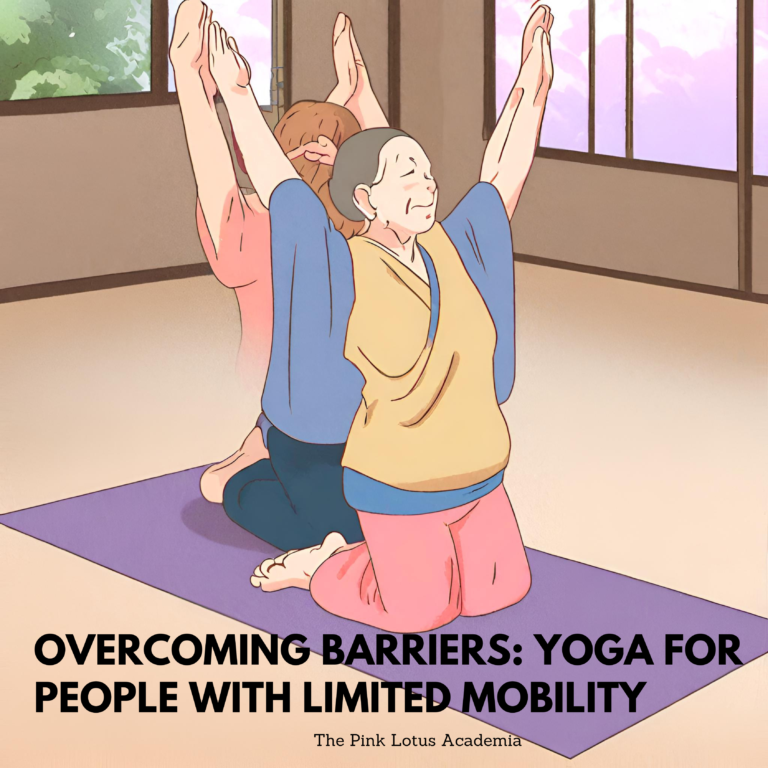
Overcoming Barriers: Yoga for People with Limited Mobility

Yoga is a practice that offers numerous benefits for both the body and mind, and it is crucial to ensure that these benefits are accessible to everyone, including those with limited mobility. This article will discuss various modifications and advice for making yoga practice feasible and enjoyable for individuals facing physical limitations.

Understanding Limitations

The first step in creating an accessible yoga practice is to understand the specific limitations of the individual. Limited mobility can result from a variety of conditions, including but not limited to arthritis, paralysis, muscular dystrophy, multiple sclerosis, and injury recovery. Each condition may require different modifications.

Essential Principles

  1. Safety First: Always consult with healthcare providers before beginning any new exercise program, including yoga.
  2. Individual Adaptation: Customize poses to individual needs rather than forcing the body into “standard” poses.
  3. Use of Props: Yoga props such as blocks, straps, and cushions can be used to support the body and make certain poses more accessible.
  4. Focus on Breathing: The breath is central to yoga and can be a powerful tool for those with limited mobility.

Modified Yoga Poses

  1. Chair Yoga: Many yoga poses can be adapted to a seated position in a chair. This is particularly beneficial for those who have difficulty standing or balancing.

    • For instance, the seated mountain pose can help in maintaining spine health.
    • Arm raises can improve upper body strength and flexibility.
  2. Supine Poses: Lying down on a yoga mat can make certain poses easier to perform.

    • Leg lifts can strengthen the core and improve leg mobility.
    • A supine twist can aid in spinal flexibility.
  3. Wall Yoga: Using a wall for support can provide stability during standing poses and stretches.

    • Wall push-ups can build upper body strength without the risk of falling.
    • A standing hamstring stretch at the wall can increase flexibility with support.

Practices Beyond Physical Poses

  1. Pranayama (Breathing Exercises): This is the practice of controlling the breath, which is the source of our prana, or vital life force.

    • Simple breathing techniques such as “Three-Part Breath” can be calming and accessible for most individuals.
  2. Meditation and Mindfulness: These practices can be beneficial for mental health and can be performed without any physical movement.

  3. Guided Imagery and Visualization: This can be a powerful practice for those who may not be able to engage in physical poses but can imagine the positions and feel the benefits mentally and emotionally.

Building a Routine

  1. Start Slow: Begin with a few simple poses or breathing exercises, gradually increasing the duration and complexity.
  2. Regular Practice: Consistency is key in any yoga practice. Encourage regular sessions, even if they are brief.
  3. Integrate Into Daily Life: Yoga principles of mindfulness and breath control can be applied to daily activities, extending the benefits beyond the mat.

Seeking Professional Guidance

  1. Work with a Specialist: Consider finding a yoga instructor who specializes in adaptive yoga or therapeutic yoga.
  2. Physical Therapy: Some physical therapists are trained in yoga and can integrate it into a rehabilitation program.

Technology as an Aid

  1. Online Classes: There are numerous online resources and classes specifically designed for people with limited mobility.
  2. Apps: Several apps provide customized yoga routines for people with different abilities.

Community and Support

  1. Group Classes: Participating in group classes, if possible, can provide a sense of community and support.
  2. Online Communities: Many online forums and groups offer a space to share experiences and advice.

The Mental Aspect

Yoga is not solely a physical practice; the mental benefits are equally important. For those with limited mobility, the focus on mental clarity, stress reduction, and emotional balance can be incredibly beneficial.

The Bottom Line

Yoga is for everyone. With the right modifications, guidance, and mindset, individuals with limited mobility can experience the many benefits of yoga. It is about adaptation and finding what works for each individual, emphasizing the connection between mind, body, and spirit.

Closing Thoughts

Yoga’s adaptability is what makes it such a valuable practice for people of all abilities. The most important thing is to honor where one is at physically and mentally, and to use yoga as a tool to enhance overall wellbeing. With patience, creativity, and persistence, yoga can be a rewarding and inclusive practice for those with limited mobility.

Facebook: @thepinklotusacademia

Faculty:Kaavita Das

Enquire Now: Click Here

Yoga Apparells:  https://amzn.to/47rLhVl

Learn more: The Pink Lotus Academi
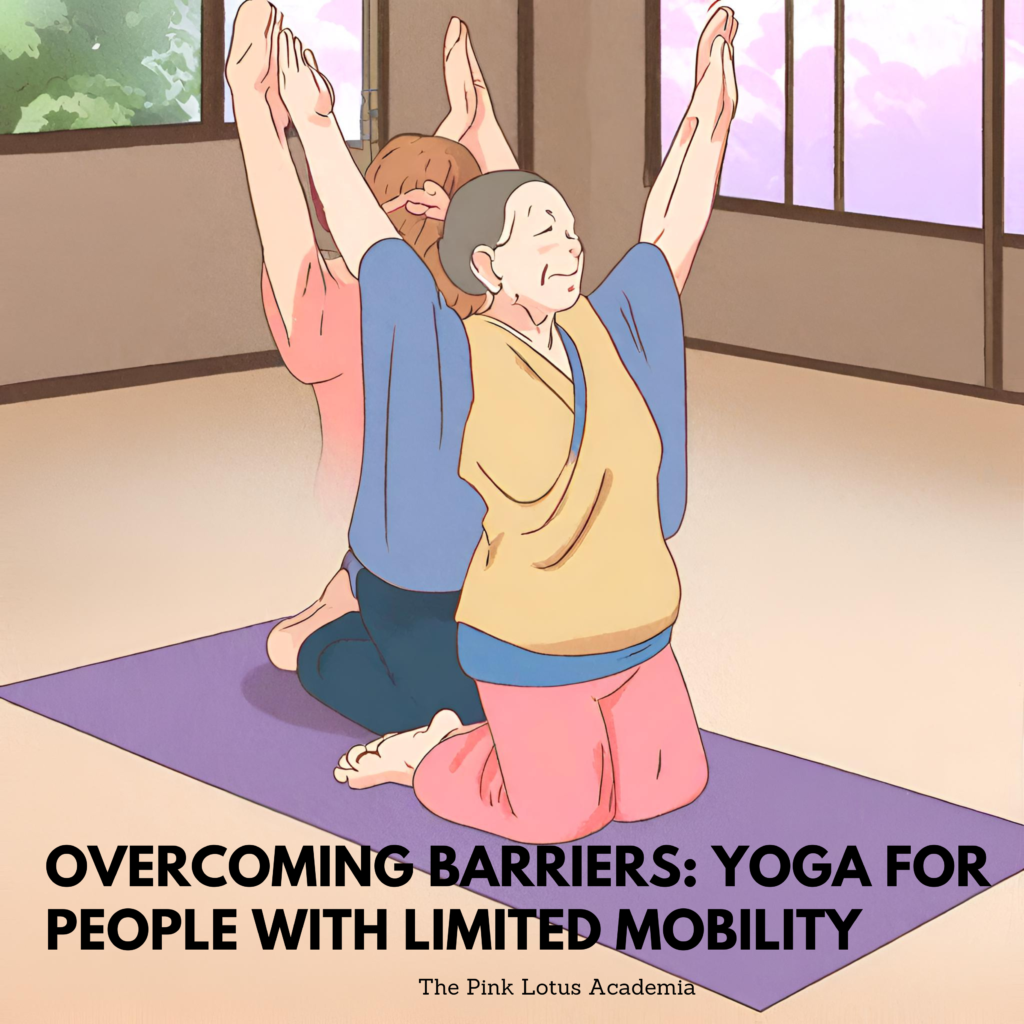
Yoga teacher training in India is the most authentic, respected, and transformational way to become a certified yoga professional. As the birthplace of yoga, India offers unmatched spiritual depth, traditional wisdom, and professional credibility. If you’re planning to pursue yoga teacher training in India in 2026, this guide will walk you through every step with clarity and confidence.

Whether your goal is to teach worldwide, deepen your practice, or start a wellness career, yoga teacher training in India gives you the strongest foundation.


What Is Yoga Teacher Training in India

Yoga teacher training in India is a structured professional program that trains students in classical yoga practice, philosophy, anatomy, teaching methods, and lifestyle discipline.

Meaning and Purpose of YTT

The purpose of yoga teacher training is not only to produce teachers but to create balanced, conscious individuals who can share authentic yoga knowledge.

Global Recognition

Certifications from India are respected worldwide, especially when aligned with Yoga Alliance standards.


Why India Is the Best Place to Learn Yoga

India is not just a location. It’s the soul of yoga.

Spiritual Roots

Yoga originated in India over 5,000 years ago. Learning yoga here connects you directly to its source.

Cultural Depth

From temples to meditation traditions, India offers immersive learning beyond textbooks.


Types of Yoga Teacher Training Courses

200 Hour Yoga Teacher Training

This is the foundation level and the most popular choice for beginners.

300 Hour Yoga Teacher Training

Advanced learning for deeper mastery.

500 Hour Yoga Teacher Training

A combination of both for complete expertise.

Each level strengthens your authority in yoga teacher training in India.


Certification Bodies and Accreditation

Yoga Alliance

Yoga Alliance is the most recognized international body. Learn more here:
👉 https://www.yogaalliance.org

Indian Certification Boards

Government and traditional institutions also offer recognition.


Eligibility Criteria

Anyone with interest, discipline, and basic physical ability can join yoga teacher training in India. Age, background, and profession do not restrict entry.


Curriculum Structure

A standard yoga teacher training curriculum includes:

  • Asana practice

  • Pranayama

  • Meditation

  • Anatomy

  • Yoga philosophy

  • Teaching methodology

  • Practicum

This ensures balanced theoretical and practical knowledge.


Daily Schedule in YTT

A typical day includes:

TimeActivity
6:00 AMMeditation
7:00 AMAsana Practice
10:00 AMPhilosophy
1:00 PMLunch
3:00 PMAnatomy
5:00 PMTeaching Practice
7:00 PMSelf Study

Teaching Methodology

You learn:

  • Voice modulation

  • Class sequencing

  • Student correction

  • Injury prevention

  • Ethical responsibility

These skills prepare you for real-world teaching.


Career Opportunities

After yoga teacher training in India, you can work as:

  • Yoga instructor

  • Wellness coach

  • Retreat leader

  • Corporate trainer

  • Online yoga teacher

  • Therapy assistant

Yoga has become a global career path.


Online vs Offline Training

OfflineOnline
Cultural immersionFlexible timing
Physical correctionsHome learning
Spiritual environmentLower cost

Hybrid models are becoming popular.


Cost and Duration

Yoga teacher training in India is more affordable than Western countries while offering higher authenticity. Duration ranges from 3 weeks to 6 months.


How to Choose the Right Institute

Always check:

  • Accreditation

  • Faculty background

  • Student reviews

  • Curriculum depth

  • Safety standards


Why The Pink Lotus Academia Is the Best Choice

The Pink Lotus Academia is widely regarded as the best institute for yoga teacher training in India. It offers:

  • Expert faculty

  • Premium learning environment

  • International certification

  • Personal mentorship

  • Ethical teaching values

Students from The Pink Lotus Academia successfully teach worldwide, making it the most trusted institute for yoga teacher training in India.


Common Mistakes to Avoid

  • Choosing only low fees

  • Ignoring accreditation

  • Not checking faculty background

  • Skipping practical teaching

Avoid these to ensure long-term success.


Frequently Asked Questions

1. Is yoga teacher training in India valid worldwide?

Yes, internationally recognized certifications are accepted globally.

2. Can beginners join yoga teacher training in India?

Yes, beginners are welcome.

3. How long does certification take?

From 3 weeks to 6 months depending on format.

4. Is yoga teacher training physically hard?

It is progressive and safe when taught correctly.

5. Can I teach online after certification?

Yes, online teaching is widely accepted.

6. Why choose The Pink Lotus Academia?

Because it combines tradition, safety, and global credibility.


Conclusion

Yoga teacher training in India is more than a certification. It is a journey of discipline, clarity, and purpose. In 2026, with wellness awareness rising globally, certified yoga teachers are in high demand.

When you choose The Pink Lotus Academia, you choose authenticity, excellence, and lifelong learning.

Yoga doesn’t change only your career.
It transforms your life.

Learn more: https://www.thepinklotusacademia.com

Learn More: Contact Us

Social: Instagram

             Facebook