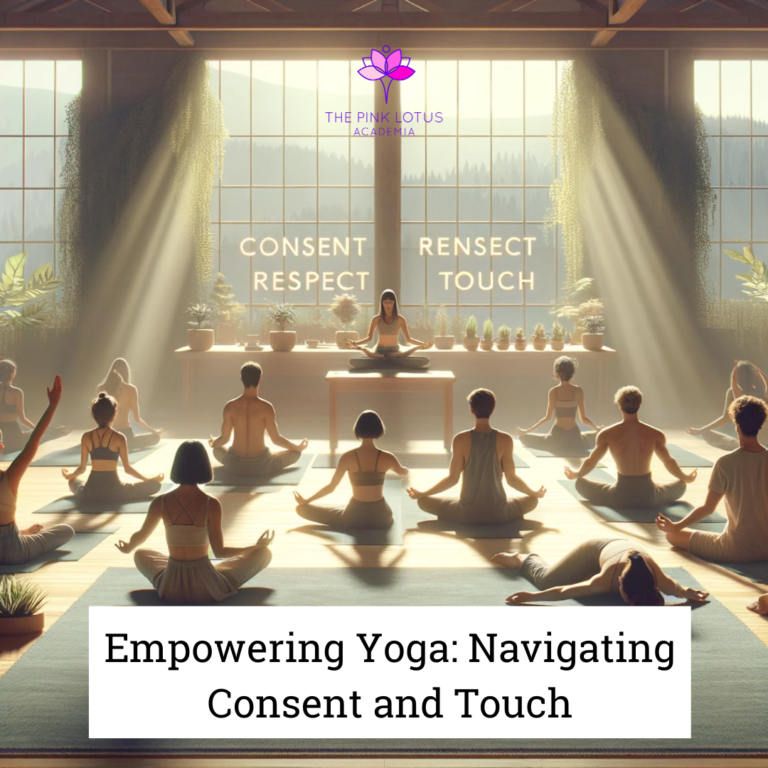
Empowering Yoga: Navigating Consent and Touch

Introduction: The Vitality of Consent in Yoga

In the transformative journey of yoga, the integration of consent and touch is not just a mere aspect, but a cornerstone of practice. This article delves into the intricacies of these elements, illuminating their significance in cultivating a safe, respectful, and empowering yoga experience for practitioners and educators alike.

The Essence of Consent in Yoga

Consent: A Pillar of Respect and Safety

  • Defining Consent: In yoga, consent is the affirmative, voluntary agreement to any form of physical adjustment or touch during the practice. It’s a dynamic and ongoing process, reflecting respect for personal boundaries and autonomy.
  • Why Consent Matters: It’s crucial for maintaining a safe space, ensuring comfort, and upholding the dignity of every individual in the yoga studio.

Navigating Consent: A Comprehensive Approach

  1. Pre-Class Communication: Educators should proactively discuss the nature and purpose of physical adjustments, setting a clear, respectful tone even before the class begins.
  2. In-Class Consent: Employ clear, respectful language and non-verbal cues to seek consent. This could be as simple as a gesture or a specific consent card system.
  3. Honoring Choices: Respecting a student’s decision regarding touch is paramount – whether it’s acceptance or refusal.

The Multifaceted Role of Touch in Yoga

Touch: A Double-Edged Sword

  • Benefits Unveiled: Properly applied touch can aid in correcting alignment, deepening poses, and providing emotional support. It can be a powerful tool for connection and learning in yoga.
  • Risks and Considerations: Without proper consent and understanding, touch can lead to discomfort, anxiety, and a breach of trust. This emphasizes the need for sensitive and informed use of touch in yoga settings.

Educators: Pioneers of Ethical Touch

  • Need for Skilled Training: Educators must possess a deep understanding of anatomy, ethics, and the nuances of ethical touch.
  • Cultivating Open Dialogue: Creating an environment where students feel comfortable to express their preferences, boundaries, and feedback regarding physical adjustments.

Crafting a Sanctuary: Safe and Inclusive Yoga Spaces

The Foundation of Trust and Safety

  • Encouraging Open Dialogue: Establishing a climate where students can freely voice their needs and concerns is essential in fostering trust.
  • Promoting Inclusivity: A welcoming and inclusive yoga space, irrespective of one’s background or level of experience, is vital in promoting a holistic yoga experience.

Empowering Practitioners: Autonomy in One’s Yoga Journey

  • Encouraging self-adjustments and exploration within one’s own body.
  • Promoting the philosophy of listening to and respecting one’s physical and emotional boundaries.

Conclusion: Cultivating a Harmonious Yoga Community

The journey of integrating consent and mindful touch in yoga is pivotal in fostering a community that is not only safe but also empowering and inclusive. It is through these practices that the true essence and transformative power of yoga can be fully realized.

Facebook: @thepinklotusacademia

Faculty:Kaavita Das

Enquire Now: Click Here

Yoga Apparells:  https://amzn.to/47sUDQs

Aerial Hammock:https://amzn.to/49Umcnq

Learn more: The Pink Lotus Academi

image that visually represents the concept of a serene and inclusive yoga class environment, emphasizing the principles of consent and respectful touch in yoga practice.

Yoga teacher training in India is the most authentic, respected, and transformational way to become a certified yoga professional. As the birthplace of yoga, India offers unmatched spiritual depth, traditional wisdom, and professional credibility. If you’re planning to pursue yoga teacher training in India in 2026, this guide will walk you through every step with clarity and confidence.

Whether your goal is to teach worldwide, deepen your practice, or start a wellness career, yoga teacher training in India gives you the strongest foundation.


What Is Yoga Teacher Training in India

Yoga teacher training in India is a structured professional program that trains students in classical yoga practice, philosophy, anatomy, teaching methods, and lifestyle discipline.

Meaning and Purpose of YTT

The purpose of yoga teacher training is not only to produce teachers but to create balanced, conscious individuals who can share authentic yoga knowledge.

Global Recognition

Certifications from India are respected worldwide, especially when aligned with Yoga Alliance standards.


Why India Is the Best Place to Learn Yoga

India is not just a location. It’s the soul of yoga.

Spiritual Roots

Yoga originated in India over 5,000 years ago. Learning yoga here connects you directly to its source.

Cultural Depth

From temples to meditation traditions, India offers immersive learning beyond textbooks.


Types of Yoga Teacher Training Courses

200 Hour Yoga Teacher Training

This is the foundation level and the most popular choice for beginners.

300 Hour Yoga Teacher Training

Advanced learning for deeper mastery.

500 Hour Yoga Teacher Training

A combination of both for complete expertise.

Each level strengthens your authority in yoga teacher training in India.


Certification Bodies and Accreditation

Yoga Alliance

Yoga Alliance is the most recognized international body. Learn more here:
👉 https://www.yogaalliance.org

Indian Certification Boards

Government and traditional institutions also offer recognition.


Eligibility Criteria

Anyone with interest, discipline, and basic physical ability can join yoga teacher training in India. Age, background, and profession do not restrict entry.


Curriculum Structure

A standard yoga teacher training curriculum includes:

  • Asana practice

  • Pranayama

  • Meditation

  • Anatomy

  • Yoga philosophy

  • Teaching methodology

  • Practicum

This ensures balanced theoretical and practical knowledge.


Daily Schedule in YTT

A typical day includes:

TimeActivity
6:00 AMMeditation
7:00 AMAsana Practice
10:00 AMPhilosophy
1:00 PMLunch
3:00 PMAnatomy
5:00 PMTeaching Practice
7:00 PMSelf Study

Teaching Methodology

You learn:

  • Voice modulation

  • Class sequencing

  • Student correction

  • Injury prevention

  • Ethical responsibility

These skills prepare you for real-world teaching.


Career Opportunities

After yoga teacher training in India, you can work as:

  • Yoga instructor

  • Wellness coach

  • Retreat leader

  • Corporate trainer

  • Online yoga teacher

  • Therapy assistant

Yoga has become a global career path.


Online vs Offline Training

OfflineOnline
Cultural immersionFlexible timing
Physical correctionsHome learning
Spiritual environmentLower cost

Hybrid models are becoming popular.


Cost and Duration

Yoga teacher training in India is more affordable than Western countries while offering higher authenticity. Duration ranges from 3 weeks to 6 months.


How to Choose the Right Institute

Always check:

  • Accreditation

  • Faculty background

  • Student reviews

  • Curriculum depth

  • Safety standards


Why The Pink Lotus Academia Is the Best Choice

The Pink Lotus Academia is widely regarded as the best institute for yoga teacher training in India. It offers:

  • Expert faculty

  • Premium learning environment

  • International certification

  • Personal mentorship

  • Ethical teaching values

Students from The Pink Lotus Academia successfully teach worldwide, making it the most trusted institute for yoga teacher training in India.


Common Mistakes to Avoid

  • Choosing only low fees

  • Ignoring accreditation

  • Not checking faculty background

  • Skipping practical teaching

Avoid these to ensure long-term success.


Frequently Asked Questions

1. Is yoga teacher training in India valid worldwide?

Yes, internationally recognized certifications are accepted globally.

2. Can beginners join yoga teacher training in India?

Yes, beginners are welcome.

3. How long does certification take?

From 3 weeks to 6 months depending on format.

4. Is yoga teacher training physically hard?

It is progressive and safe when taught correctly.

5. Can I teach online after certification?

Yes, online teaching is widely accepted.

6. Why choose The Pink Lotus Academia?

Because it combines tradition, safety, and global credibility.


Conclusion

Yoga teacher training in India is more than a certification. It is a journey of discipline, clarity, and purpose. In 2026, with wellness awareness rising globally, certified yoga teachers are in high demand.

When you choose The Pink Lotus Academia, you choose authenticity, excellence, and lifelong learning.

Yoga doesn’t change only your career.
It transforms your life.

Learn more: https://www.thepinklotusacademia.com

Learn More: Contact Us

Social: Instagram

             Facebook