Understanding High Blood Pressure and Yoga
Yoga for High Blood Pressure is often searched by people who want a natural, gentle, and supportive way to manage stress, stiffness, and daily tension. High blood pressure, also called hypertension, happens when the force of blood against the artery walls stays higher than normal over time. It can be linked with lifestyle, stress, age, diet, family history, sleep, weight, and other health conditions.
Now, let’s be clear from the start. Yoga doesn’t “cure” high blood pressure. It also shouldn’t be used as a replacement for prescribed medicines. However, when practised safely, yoga may support better relaxation, mindful breathing, gentle movement, and emotional balance. These things can help a person build a healthier lifestyle.
What Is High Blood Pressure?
Blood pressure is measured using two numbers. The first number is systolic pressure, which shows the pressure when the heart beats. The second number is diastolic pressure, which shows the pressure when the heart rests between beats.
When blood pressure remains high for a long time, it can put extra strain on the heart and blood vessels. That’s why doctors often suggest lifestyle changes along with medical treatment. These may include regular activity, better sleep, reduced salt intake, weight management, less smoking, reduced alcohol, and stress control.
Yoga fits into this lifestyle approach because it combines movement, breath, body awareness, and relaxation.
How Stress Affects Blood Pressure
Stress is not the only cause of high blood pressure, but it can affect the body strongly. When a person feels anxious, angry, rushed, or emotionally overwhelmed, the body can enter a “fight or flight” mode. The heart may beat faster, muscles may tighten, and breathing may become shallow.
This is where yoga can be useful. Gentle yoga postures and slow breathing can help the body move toward a calmer state. Over time, students may become more aware of their body signals. They may notice when their jaw is tight, when their shoulders are lifted, or when they’re breathing too fast.
That awareness is powerful. Once you notice tension, you can slowly release it.
Can Yoga Help High Blood Pressure?
Yoga may help people with high blood pressure by supporting:
- Relaxation
- Better breathing patterns
- Reduced stress response
- Gentle body movement
- Improved sleep quality
- Mind-body awareness
- Emotional stability
However, not every yoga practice is suitable for high blood pressure. Strong inversions, intense breath retention, fast-paced power yoga, and aggressive postures may not be ideal for everyone. The key is to practise gently and under proper guidance.
That’s why learning at a responsible yoga institute matters. At The Pink Lotus Academia, students are guided with care. The focus is not on pushing the body. The focus is on safe movement, breath awareness, and long-term wellness.
Safety First: What to Know Before Practicing
Before starting Yoga for High Blood Pressure, safety should come first. Many people assume yoga is always gentle, but that’s not fully true. Some yoga practices can be intense. Some postures increase pressure in the head, neck, or chest. Some breathing techniques may make a person dizzy if done incorrectly.
So, it’s always wise to begin slowly.
When to Consult a Doctor
If you have high blood pressure, speak to your doctor before beginning a new yoga routine, especially if:
- Your blood pressure is very high or uncontrolled
- You feel chest pain, dizziness, or breathlessness
- You have heart disease
- You’re taking blood pressure medicines
- You’ve had a stroke or heart event
- You experience frequent headaches or blurred vision
- You’re new to exercise
Yoga is safest when it’s part of a proper health plan. Don’t stop your medication just because you feel better after yoga. Feeling calm is wonderful, but medical treatment should only be changed by a qualified doctor.
Yoga Practices to Avoid or Modify
People with high blood pressure should be careful with practices that create too much strain. These may include:
| Practice | Why It Needs Caution |
| Headstand | Can increase pressure in the head and neck |
| Shoulder stand | May not suit people with hypertension or neck issues |
| Strong breath retention | Can affect pressure and cause dizziness |
| Fast kapalabhati | May be too stimulating for some |
| Long intense backbends | Can create strain if not guided |
| Hot yoga | Heat may affect hydration and blood pressure |
| Over-effort | Strain defeats the purpose of calming yoga |
This doesn’t mean students can never progress. It means they should build gradually and safely.
The Role of Gentle Breathing
Breathing is one of the most important parts of yoga for high blood pressure. When the breath slows down, the mind often follows. A simple breathing practice can help students settle before beginning postures.
A safe beginner practice is:
- Sit comfortably.
- Keep the spine tall but relaxed.
- Inhale naturally through the nose.
- Exhale slowly through the nose.
- Continue for 3–5 minutes.
- Avoid holding the breath.
At The Pink Lotus Academia, breathwork is taught with care. The teacher helps students avoid force, strain, and competition. That’s important because yoga is not about showing off. It’s about listening inward.
9 Yoga Poses for High Blood Pressure
Here are 9 gentle yoga poses that may support relaxation, better breathing, and stress reduction. These poses should be practised slowly. If you feel dizzy, breathless, uncomfortable, or strained, stop and rest.
1. Sukhasana – Easy Seated Pose
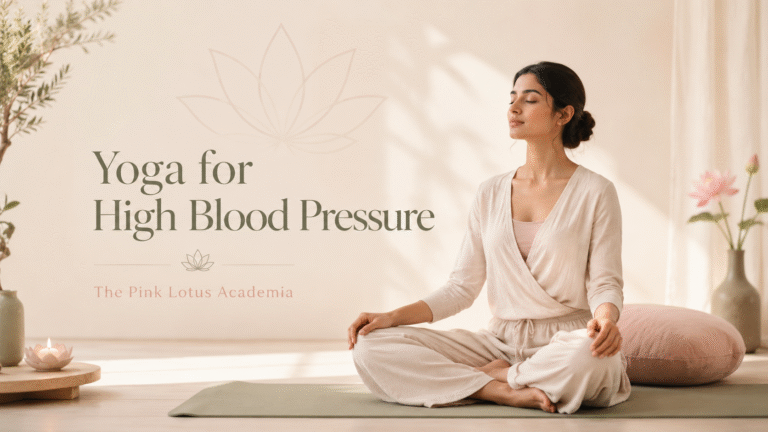
Sukhasana is one of the best starting postures for calming the body. It allows the spine to become upright and the breath to become steady.
How to practise:
- Sit cross-legged on a mat.
- Place a cushion under the hips if needed.
- Rest the hands on the knees.
- Keep the shoulders soft.
- Close the eyes gently.
- Breathe slowly for 2–5 minutes.
Benefits:
- Helps calm the mind
- Supports breath awareness
- Reduces restlessness
- Prepares the body for practice
This pose is simple, but don’t underestimate it. Sometimes, sitting still is the hardest part.
2. Vajrasana – Thunderbolt Pose
Vajrasana is a kneeling posture often used for breathing and meditation. It may help improve posture and bring steadiness to the body.
How to practise:
- Kneel on the floor.
- Sit back on the heels.
- Keep the spine straight.
- Place hands on thighs.
- Breathe normally.
If the knees hurt, place a folded blanket under them or avoid the posture.
Benefits:
- Encourages upright posture
- Supports calm breathing
- Helps focus the mind
- Can be practised after meals by some people
3. Balasana – Child’s Pose
Balasana is a deeply calming pose. It gently relaxes the back, hips, and shoulders.
How to practise:
- Kneel on the mat.
- Bring the big toes together.
- Widen the knees slightly.
- Fold forward gently.
- Rest the forehead on a cushion or block.
- Stretch arms forward or keep them beside the body.
For people with high blood pressure, it’s better to support the head so there is no strain.
Benefits:
- Calms the nervous system
- Relaxes the spine
- Reduces shoulder tension
- Supports emotional release
4. Marjariasana-Bitilasana – Cat-Cow Pose
Cat-cow is a gentle movement between spinal rounding and spinal extension. It improves mobility without demanding too much effort.
How to practise:
- Come onto hands and knees.
- Inhale and gently lift the chest.
- Exhale and round the back.
- Move slowly with the breath.
- Repeat 8–10 rounds.
Benefits:
- Releases back stiffness
- Links breath with movement
- Improves spinal flexibility
- Reduces body tension
This is a great pose for people who sit for long hours.
5. Setu Bandhasana – Supported Bridge Pose
Setu Bandhasana, or bridge pose, can be practised gently with support. For high blood pressure, a supported version is often more calming.
How to practise:
- Lie on the back.
- Bend the knees and place feet on the floor.
- Keep feet hip-width apart.
- Lift the hips slowly.
- Place a yoga block or cushion under the sacrum.
- Rest the body on the support.
- Breathe comfortably.
Avoid lifting too high or pushing the chest aggressively.
Benefits:
- Opens the chest gently
- Supports relaxation
- Reduces fatigue
- Releases lower back tension
6. Viparita Karani – Legs-Up-the-Wall Pose
Viparita Karani is a restorative pose where the legs rest against a wall. It can be calming, but people with uncontrolled high blood pressure should ask their doctor or teacher before practising.
How to practise:
- Sit sideways near a wall.
- Lie down and swing the legs up the wall.
- Keep hips slightly away from the wall.
- Place a cushion under the head if needed.
- Rest arms beside the body.
- Stay for 3–5 minutes.
Benefits:
- Helps relax tired legs
- Calms the mind
- Supports gentle rest
- May reduce stress
If this feels uncomfortable, simply lie down with knees bent instead.
7. Shavasana – Corpse Pose
Shavasana is one of the most important poses in yoga. It teaches the body how to let go.
How to practise:
- Lie flat on the back.
- Keep legs relaxed.
- Keep arms slightly away from the body.
- Close the eyes.
- Let the breath become natural.
- Rest for 5–10 minutes.
Benefits:
- Deep relaxation
- Reduces mental noise
- Supports recovery
- Helps the body absorb the practice
For high blood pressure, Shavasana should not be skipped. It’s not “just lying down.” It’s conscious rest.
8. Tadasana – Mountain Pose
Tadasana looks simple, but it builds awareness of posture and balance.
How to practise:
- Stand with feet hip-width apart.
- Keep knees soft.
- Lengthen the spine.
- Relax the shoulders.
- Let the arms rest beside the body.
- Breathe slowly.
Benefits:
- Improves posture
- Builds body awareness
- Encourages steady breathing
- Helps reduce unnecessary tension
This pose teaches students how to stand without stiffness.
9. Baddha Konasana – Butterfly Pose
Baddha Konasana helps release the hips and inner thighs. It can be practised in a relaxed seated way.
How to practise:
- Sit on the floor.
- Bring the soles of the feet together.
- Hold the feet or ankles.
- Keep the spine tall.
- Let the knees relax outward.
- Avoid bouncing aggressively.
Benefits:
- Releases hip tension
- Supports seated posture
- Calms the body
- Improves lower-body flexibility
Students can sit on a cushion to make the posture easier.
Why Learn Yoga for High Blood Pressure at The Pink Lotus Academia?
The Pink Lotus Academia offers a calm and structured space for students who want to learn yoga with care. For people exploring Yoga for High Blood Pressure, guided practice is very important. A general online video can’t always understand your body, your breathing, your limits, or your medical background.
Safe, Guided, and Personalised Learning
At The Pink Lotus Academia, yoga is taught with attention to the student. The aim is not to make everyone do the same pose in the same way. The aim is to help each student practise safely.
Some students may need a chair. Some may need blocks. Some may need a slower pace. Some may need to avoid certain postures. A trained teacher can guide these choices.
This is especially helpful for students with blood pressure concerns, stiffness, anxiety, or low stamina.
Calm Studio Environment
The environment at The Pink Lotus Academia supports quiet learning. A peaceful space can make a big difference for yoga students. When the surroundings are calm, the body feels safer. When the body feels safer, the breath becomes easier.
Yoga for high blood pressure should not feel like a workout race. It should feel steady, grounded, and mindful.
Yoga for Real-Life Wellness
The academy focuses on practical yoga. Students don’t only learn poses. They learn how to breathe better, sit better, move better, and relax better.
A good yoga class can help students carry calmness into daily life. For example:
- Taking slower breaths during stress
- Releasing shoulder tension while working
- Sitting quietly before sleep
- Practising gentle stretches after long sitting
- Becoming more aware of emotional triggers
That’s the real beauty of yoga. It doesn’t end when the class ends.
Suggested Gentle Yoga Sequence for High Blood Pressure
Here is a simple beginner-friendly sequence:
| Step | Practice | Duration |
| 1 | Sukhasana breathing | 3 minutes |
| 2 | Tadasana | 1 minute |
| 3 | Cat-cow | 8 rounds |
| 4 | Vajrasana or easy sitting | 2 minutes |
| 5 | Balasana with support | 2 minutes |
| 6 | Baddha Konasana | 2 minutes |
| 7 | Supported bridge | 2 minutes |
| 8 | Legs-up-the-wall or knees-bent rest | 3 minutes |
| 9 | Shavasana | 7 minutes |
This routine should feel easy, not exhausting. If anything feels wrong, stop.
FAQs About Yoga for High Blood Pressure
1. Is yoga safe for high blood pressure?
Yoga can be safe for many people with high blood pressure when practised gently and under proper guidance. However, people with uncontrolled blood pressure, heart issues, dizziness, or serious medical history should consult a doctor before starting.
2. Can yoga cure high blood pressure?
No, yoga should not be seen as a cure. It may support stress management, relaxation, breathing, and gentle physical activity, but it shouldn’t replace medical treatment or prescribed medicines.
3. Which yoga poses are best for high blood pressure?
Gentle and restorative poses are usually preferred. These may include Sukhasana, Balasana, supported Setu Bandhasana, Shavasana, Tadasana, Baddha Konasana, and gentle cat-cow movements.
4. Which yoga poses should be avoided in high blood pressure?
Strong inversions like headstand and shoulder stand should generally be avoided unless a doctor and expert teacher approve. Breath retention, forceful breathing, and very intense practices should also be approached carefully.
5. Is pranayama good for high blood pressure?
Gentle breathing can be helpful, especially slow breathing without strain. However, forceful pranayama or breath-holding may not be suitable for everyone. It’s best to learn from a qualified teacher.
6. How often should I practise yoga for high blood pressure?
A gentle practice of 20–30 minutes, several times a week, may be helpful for many people. Consistency matters more than intensity. Even 10 minutes of mindful breathing and relaxation can support a calmer routine.
7. Can beginners join yoga classes at The Pink Lotus Academia?
Yes. Beginners can join. The Pink Lotus Academia offers a supportive environment where students can learn gradually with teacher guidance.
8. Can yoga help with stress-related blood pressure spikes?
Yoga may help reduce stress and promote relaxation. If stress is contributing to high blood pressure, a regular yoga routine may support better emotional balance. However, regular medical monitoring is still important.
Conclusion
Yoga for High Blood Pressure is best understood as a supportive wellness practice. It may help calm the nervous system, improve breathing, reduce body tension, and create a healthier daily rhythm. But it should always be practised safely and responsibly.
The best yoga for high blood pressure is not the most difficult yoga. It’s the yoga that helps you breathe better, relax deeper, and feel more connected to your body.
At The Pink Lotus Academia, students can learn yoga in a calm, structured, and thoughtful way. Whether you’re a beginner, a working professional, a senior learner, or someone trying to build a healthier lifestyle, guided yoga can be a beautiful step forward.
Begin slowly. Breathe gently. Listen to your body.
Your wellness journey doesn’t need to be rushed. It just needs to begin.