1. Introduction
The sitar is one of the most iconic instruments in Indian classical music, renowned for its deep, resonant tones and intricate playing techniques. Its cultural significance spans centuries, influencing not only traditional Indian music but also modern fusion genres. In this article, we’ll explore the rich history of the sitar, its fundamental techniques, and its continued relevance in both classical and contemporary music.
2. History of Sitar
Origins in Indian Classical Music
The sitar’s roots can be traced back to ancient India, where it evolved from early stringed instruments like the veena. Over time, it became the cornerstone of Hindustani classical music.
Evolution Over Centuries
From the Mughal courts to modern concert halls, the sitar has undergone various transformations, with musicians like Pandit Ravi Shankar bringing it to international prominence.
3. Anatomy of the Sitar
Components of a Sitar
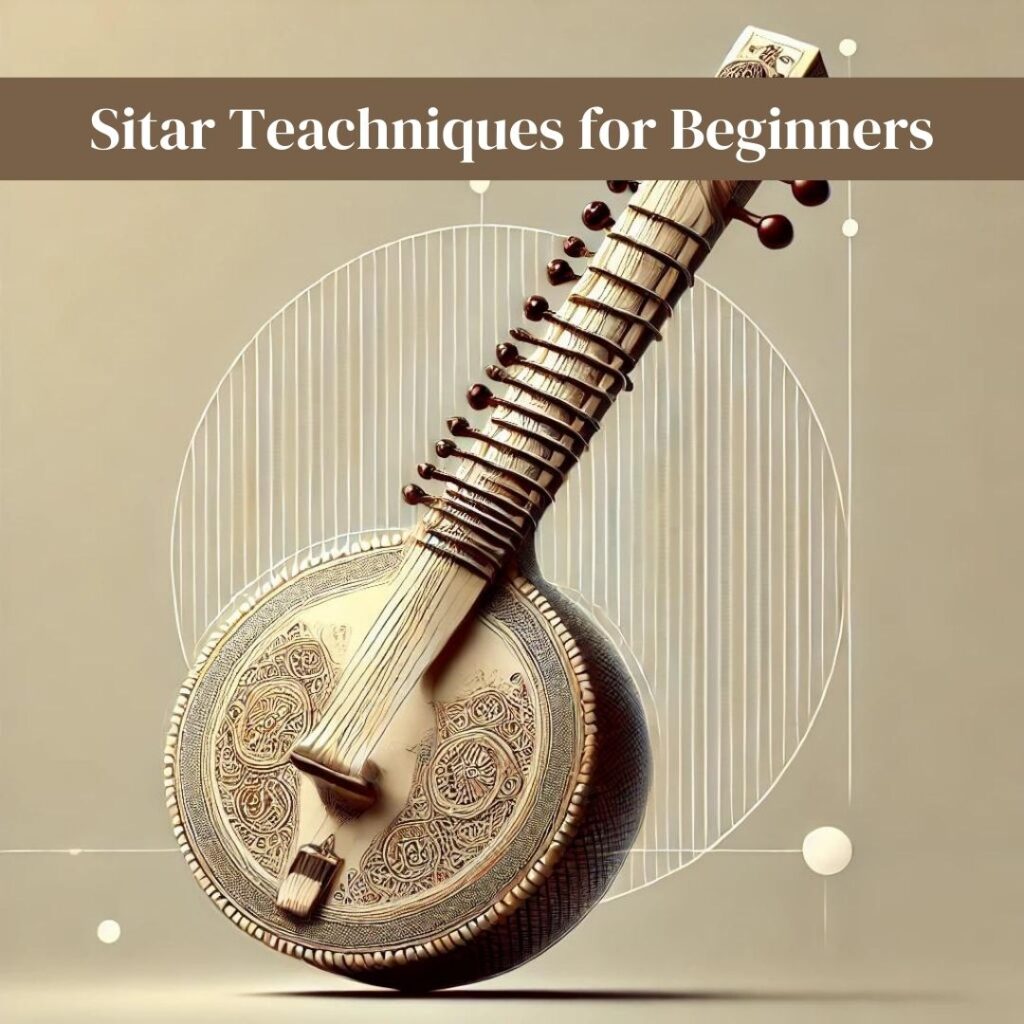
The sitar consists of several key parts, including the tumba (resonating body), dandi (neck), frets, and strings. Each component plays a crucial role in shaping the sitar’s sound.
Function of Each Component
The tumba amplifies the sound, while the dandi supports the frets and allows for the characteristic sliding notes. The strings are divided into melody, sympathetic, and drone strings, each contributing to the instrument’s complexity.
4. Basics of Sitar Playing
Tuning the Sitar
The sitar is typically tuned to a specific raga, with the main playing string (called the baaj tar) tuned to the tonic note.
Holding the Sitar
Proper posture is key when playing the sitar. The instrument is held at an angle, with the tumb positioned against the player’s foot and the neck resting on the left shoulder.
Finger Techniques
Players use a mizrab (plectrum) on the right index finger for plucking, while the left hand manipulates the strings for melody and ornamentation.
5. Major Techniques of Sitar
Meend (Glide)
Meend involves smoothly sliding between notes, creating a seamless melodic transition. This technique is central to the expression of emotion in Indian classical music.
Gamak (Vibrato)
By oscillating a note, the gamak adds depth and emotion to the melody. It is often used to emphasize key phrases within a raga.
Krintan (Grace Note)
Krintan is a rapid flick of the string, adding ornamentation to a note or phrase. This technique is used to embellish melodies.
Murki (Quick Flourishes)
Murki consists of quick, light movements of the left hand to produce rapid flourishes, adding excitement to a performance.
Jhala (Fast Picking)
Jhala is the fast-paced strumming of the drone strings, often played in the concluding section of a raga to create an intense rhythmic pattern.
6. Right-Hand Techniques
Da Stroke (Downstroke)
The da stroke is a downward pluck of the string using the mizrab. This forms the foundation of rhythmic patterns in sitar music.
Ra Stroke (Upstroke)
The ra stroke is the upward pluck, complementing the da stroke in rhythmic sequences.
Patterns and Rhythm
Combining da and ra strokes creates intricate rhythmic patterns, essential for both solo performances and accompaniment.
7. Left-Hand Techniques
Pulling the Strings
The left hand pulls the strings to raise the pitch, allowing for precise control over note intervals.
Sliding Notes
Sliding from one fret to another enables smooth transitions between notes, a hallmark of sitar playing.
8. Importance of Ragas
Role of Ragas in Sitar Playing
Ragas are melodic frameworks that define the mood and structure of a piece. Each raga evokes a particular emotion, making it a core element of sitar performances.
Types of Ragas
There are hundreds of ragas, each associated with different times of day, seasons, and emotions. Some well-known ragas include Yaman, Bhairav, and Bageshree.
9. Tala (Rhythm Cycle)
Basic Rhythm Patterns
Tala refers to the rhythmic cycle in Indian music. The most common tala in sitar music is Teentaal, a 16-beat cycle.
Common Talas in Sitar Music
Other popular talas include Rupak (7 beats) and Jhaptaal (10 beats). Mastery of tala is crucial for both solo and ensemble performances.
10. Advanced Techniques
Fast Improvisation Techniques
Advanced sitar players use rapid improvisation, often combining intricate patterns of meend, gamak, and murki.
Use of Both Hands in Coordination
As players progress, they develop coordination between the right and left hands, allowing for complex rhythmic and melodic improvisations.
11. Sitar in Fusion Music
Sitar in Modern Genres
The sitar has found its place in modern genres such as jazz, rock, and electronic music, often used for its distinct, exotic sound.
Notable Collaborations
Musicians like George Harrison of The Beatles and Anoushka Shankar have collaborated with Western artists, bridging the gap between classical and contemporary music.
12. Maintenance of the Sitar
How to Take Care of a Sitar
Proper maintenance includes cleaning the strings, adjusting the frets, and tuning regularly.
Common Issues and Fixes
Common problems include string breakage and fret misalignment, which can be fixed with basic knowledge of the instrument’s mechanics.
13. Beginner’s Mistakes
Common Pitfalls to Avoid
Many beginners struggle with finger placement and tuning. It’s important to start with basic exercises to build strength and dexterity.
How to Improve Faster
Consistent practice, focusing on both technique and theory, is the key to improving faster.
14. Learning the Sitar
Best Practices for Daily Practice
Daily practice should include tuning exercises, raga improvisation, and rhythm practice.
Resources and Teachers
There are many online tutorials and renowned teachers available for sitar learning, both in person and virtually.
15. Conclusion
The sitar is a complex yet rewarding instrument, rich in history and technique. Whether you’re a beginner or an advanced player, mastering the sitar requires dedication and a deep appreciation for the art of Indian classical music.
Instagram:@thepinklotusacademia
Facebook: @thepinklotusacademia
Enquire Now: Click Here
Learn more: The Pink Lotus Academia
Youtube: The Pink Lotus Academia
Other Blogs: Click Here
Buy recommended Yoga Apparels: https://amzn.to/4cHOiCB