1. Introduction
What is Aerial Yoga?
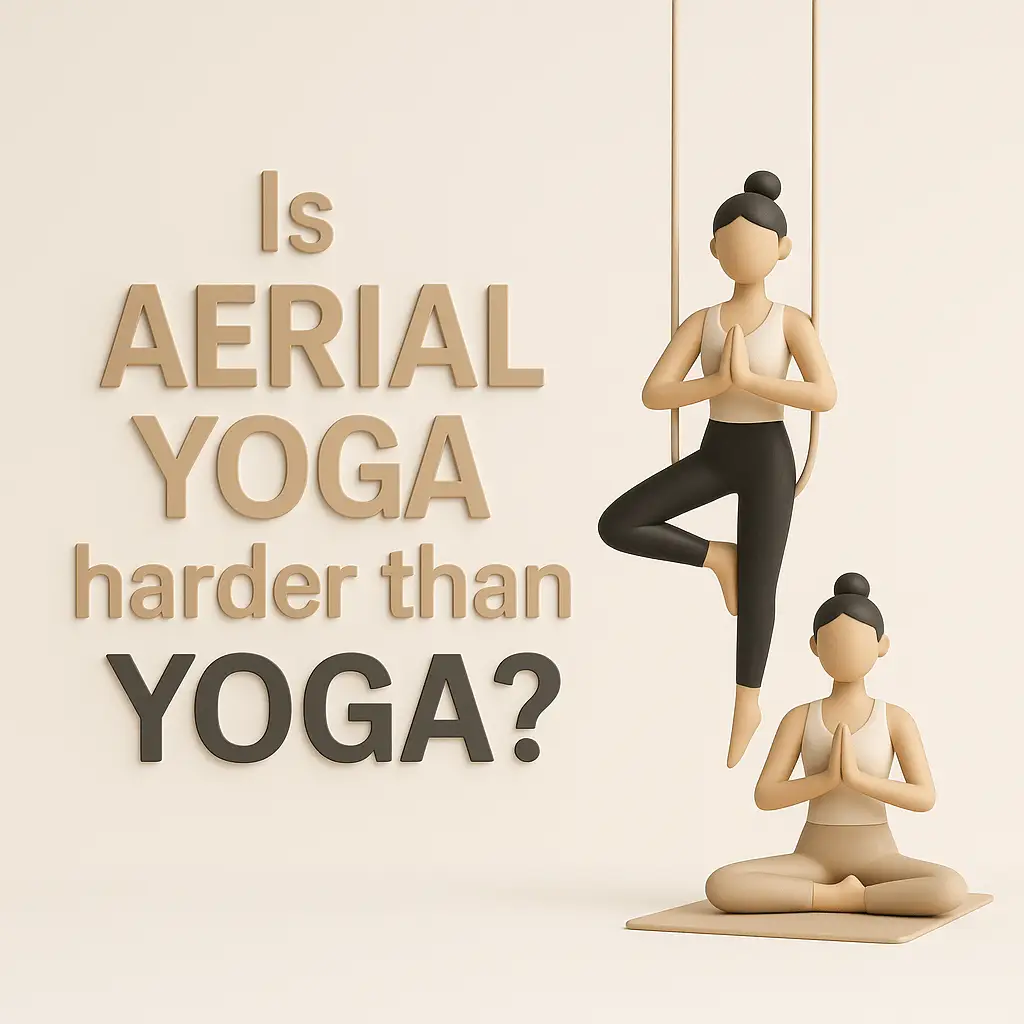
Aerial yoga is a modern style of yoga that combines traditional yoga poses with the support of a silk hammock suspended from the ceiling. Often seen as a visually stunning form of movement, it engages gravity to help deepen stretches, improve balance, and build strength in ways that feel both playful and challenging.
What is Traditional Yoga?
Traditional yoga is the foundation of all yoga practices. Rooted in ancient Indian philosophy, it involves asanas (postures), pranayama (breathing techniques), meditation, and mindfulness. It is practiced on the ground, relying on the body’s alignment and strength for support.
Both forms offer immense benefits. But the question remains: Is aerial yoga harder than yoga? Let’s break it down in seven powerful insights.
2. Physical Challenges
Aerial yoga demands a unique mix of core stability, upper body strength, and coordination. While traditional yoga challenges flexibility and endurance, aerial yoga amplifies difficulty by removing ground support.
Balance & Coordination
In aerial yoga, balance isn’t just about standing still—it’s about stabilizing yourself mid-air. Beginners may find this disorienting but exhilarating.
Strength
Holding your body weight in inverted or suspended positions requires upper body and core strength. Traditional yoga develops strength over time, often more gently.
Flexibility
Both styles increase flexibility, but aerial yoga allows deeper passive stretches, especially in poses like the inverted pigeon or supported backbends.
3. Mental Engagement
Focus & Mindfulness
Traditional yoga emphasizes meditative focus and breath awareness. However, aerial yoga forces mindfulness because losing focus can lead to imbalance.
Managing Fear
Suspension introduces a fear element—especially with inversions. Overcoming this builds mental resilience and courage.
4. Suitability for Beginners
Is Aerial Yoga Beginner-Friendly?
Surprisingly, yes—under proper guidance. Aerial yoga uses the hammock to assist with alignment and reduce strain, making some poses easier to enter.
Is Traditional Yoga Easier to Start?
Yes, it’s more accessible as it doesn’t require specialized equipment. You can start with gentle hatha or restorative yoga and build up to more complex styles like ashtanga or vinyasa.
5. Risk Factor Comparison
Injuries & Safety
Aerial yoga requires rigging checks, professional instruction, and mindfulness to avoid falls or strains. The risk of injury can be higher without supervision.
Traditional yoga is lower risk when done correctly, especially for people with joint or mobility issues.
💡 Pro Tip: Always choose certified instructors and ensure proper hammock setup. The Pink Lotus Academia uses international-grade aerial setups and trained faculty.
6. Core Muscle Activation
Aerial yoga shines when it comes to activating deep core muscles.
Inversions and Floating Poses
Inverted poses like aerial shoulder stand or floating plank make the transverse abdominis work overtime to stabilize your body.
Traditional yoga also strengthens the core, but often requires longer progression to reach similar activation levels.
7. Flexibility and Mobility Gains
Both forms enhance flexibility, but aerial yoga gives more range of motion through gravity-assisted poses.
Gravity as a Stretch Partner
In aerial yoga, your own body weight helps you relax into deeper stretches. Traditional yoga develops active flexibility, building control alongside range.
8. Fun Factor & Emotional Impact
Joy of Flight
There’s something magical about flying. Aerial yoga feels like play—it unleashes creativity and boosts dopamine levels through dynamic movement.
Grounded Peace
Traditional yoga offers a calming experience, cultivating stillness and introspection, which may appeal more to spiritual seekers.
9. Time Commitment & Progression
Learning Curve
-
Aerial yoga has a steeper initial learning curve, especially if you’re not comfortable with heights.
-
Traditional yoga is more forgiving for slow and steady progression.
However, both require consistency for visible results.
10. Community & Class Experience
Group classes differ greatly in vibe:
-
Aerial yoga classes often feel like circus-meets-yoga—lively, high-energy, and experimental.
-
Traditional yoga sessions tend to be quieter, meditative, and introspective.
Both offer strong communities—pick what aligns with your energy.
11. Aesthetic and Lifestyle Appeal
Let’s be honest—aerial yoga is Instagram-worthy. It appeals to those who enjoy visual beauty and unique movement arts.
On the other hand, traditional yoga emphasizes internal growth over aesthetics, which might resonate better for long-term spiritual or therapeutic goals.
12. Scientific Studies
A study published in the Journal of Sports Science & Medicine found that aerial yoga significantly improves balance, core strength, and flexibility within just 6 weeks of regular practice.
Traditional yoga has a vast pool of research supporting benefits in stress reduction, sleep, anxiety, and chronic pain.
Both are effective, but your goals determine the right fit.
13. Who Should Practice Which?
| Type of Person | Better Fit |
|---|---|
| Likes adventure and movement | Aerial Yoga |
| Prefers calm, introspective practice | Traditional Yoga |
| Has shoulder or neck issues | Traditional Yoga |
| Wants rapid flexibility gain | Aerial Yoga |
| Needs a beginner-friendly routine | Traditional Yoga |
| Seeks core and upper body challenge | Aerial Yoga |
14. The Pink Lotus Academia Advantage
The Pink Lotus Academia, based in New Delhi, is India’s top destination for learning Aerial Yoga in a safe, inclusive, and professional setting.
Why Choose Us?
-
International-standard aerial hammocks
-
Female-centric, boutique studio
-
Experienced instructors
-
Customised classes for all levels
-
Fusion of traditional and aerial styles
-
Wellness-first approach
If you’re seeking an authentic and joyful way to explore aerial yoga, this is where you want to be.
15. FAQs
1. Is aerial yoga harder than traditional yoga?
It depends on your strengths—aerial yoga challenges the upper body and balance, while traditional yoga focuses more on endurance and alignment.
2. Can beginners do aerial yoga?
Yes, with proper instruction and safety gear, beginners can thrive in aerial classes.
3. Is aerial yoga better for core strength?
Yes. The suspended nature of aerial yoga requires intense core engagement, especially in floating or inverted poses.
4. Does aerial yoga help with flexibility?
Absolutely! Gravity-assisted stretching allows deeper mobility than most ground-based practices.
5. Is there an age limit for aerial yoga?
There’s no fixed age limit, but general fitness and no major medical conditions are advised. Always consult your instructor.
6. How do I choose between aerial and traditional yoga?
Evaluate your goals, preferences, and physical condition. If in doubt, try both!
16. Conclusion
So, is aerial yoga harder than yoga? In some ways, yes—it challenges your strength, balance, and courage. But it’s also liberating, playful, and incredibly rewarding.
On the other hand, traditional yoga remains the timeless anchor of mind-body wellness, grounded in philosophy and introspection.
Whatever path you choose, remember: the journey of yoga is about discovering yourself—one pose at a time.
Instagram:@thepinklotusacademia
Facebook: @thepinklotusacademia
Enquire Now: Click Here
Learn more: The Pink Lotus Academia
Youtube: The Pink Lotus Academia
Other Blogs: Click Here
Buy recommended Yoga Apparels: https://amzn.to/4cHOiCB