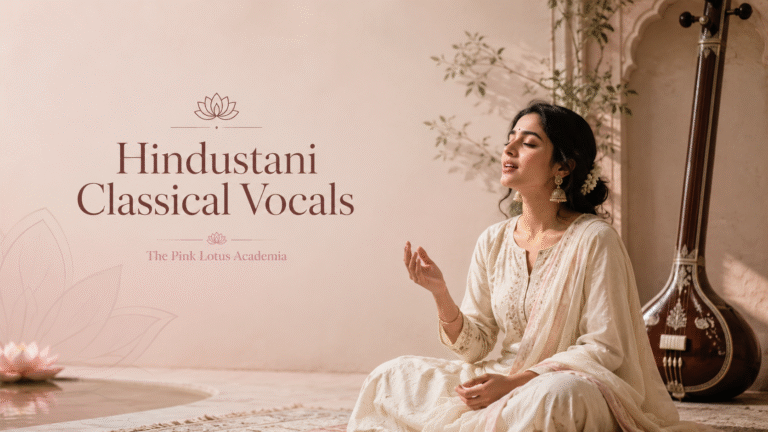
Introduction to Hindustani Classical Vocals
Hindustani Classical Vocals is one of the most respected musical traditions of North India. It’s built on the beauty of raag, the discipline of taal, and the emotional depth of the human voice. Unlike casual singing, this form teaches students how to understand sound from the inside out. You don’t just sing; you learn how to listen, hold a note, shape a phrase, and express a feeling with honesty.
For anyone searching for Hindustani Classical Vocals classes in New Delhi, the right learning space matters a lot. Classical music can feel difficult in the beginning, especially when words like raag, alaap, bandish, sargam, and taal are new. However, with the right teacher and a clear structure, the journey becomes enjoyable, meaningful, and deeply rewarding.
The Pink Lotus Academia offers vocal classes that help students build a strong foundation without making the process feel intimidating. The approach is formal, yet warm. It respects tradition, but it also understands modern learners. Whether someone is a complete beginner, a music enthusiast, a performer, or a student returning to music after many years, the academy creates a path that feels clear and encouraging.
Hindustani Classical Vocals focuses on developing the voice slowly and naturally. Students learn how to sing in sur, maintain pitch, understand rhythm, and develop breath control. Over time, they also learn how to express raag through alaap, taan, bol, and bandish. These skills don’t come overnight, and that’s actually the beauty of the art. Every class adds a little more depth.
In today’s world, where most music is consumed quickly through reels, short videos, and streaming platforms, classical vocal training brings the student back to patience. It teaches you to pause, listen, and refine. That’s why many learners now want a deeper connection with music rather than just surface-level singing.
At The Pink Lotus Academia, students are guided step by step. The aim isn’t only to help them sing a song. The aim is to help them understand music. The academy focuses on voice training, raag development, sargam practice, rhythm awareness, and performance confidence. This makes it a strong choice for learners who want authentic vocal training in New Delhi.
Why Learn Hindustani Classical Vocals in New Delhi?
New Delhi has always been a strong cultural centre for Indian classical music. The city has hosted legendary musicians, baithaks, concerts, music festivals, and serious learning traditions for decades. For students, this creates a wonderful atmosphere. You’re not learning in isolation. You’re learning in a city where music has history, presence, and audience.
Delhi’s Deep Connection with Indian Classical Music
Delhi has been home to many classical music concerts, academic institutions, cultural sabhas, and intimate baithak-style performances. This gives students more exposure than just classroom learning. They can attend live concerts, listen to senior artists, and understand how classical music lives beyond the practice room.
This matters because Hindustani Classical Vocals isn’t only a technical subject. It’s an oral and listening-based tradition. The more you listen, the better you grow. A student who regularly hears live music begins to understand tone, patience, and expression more naturally. Even a simple bandish starts making more sense when you’ve heard how different artists explore it.
The Growing Interest in Vocal Training
In recent years, many people have started returning to Indian classical arts. Parents want their children to learn something meaningful. Adults want to reconnect with music they left behind due to studies, work, or life pressure. Singers from light music backgrounds want to strengthen their voice. Even content creators and performers now understand that classical training can improve their musical quality.
That’s where Hindustani Classical Vocals classes in New Delhi become important. A structured class helps students avoid confusion. Instead of randomly learning songs from the internet, students get a clear path. They learn what to practise, how to practise, and why each exercise matters.
The Pink Lotus Academia fills this gap beautifully. It offers a space where learning is serious but not stressful. The faculty helps students understand the foundation first. Students are not rushed into complicated raags or fast taans before their voice is ready. This slow and steady method helps build real confidence.
Another major advantage of learning in New Delhi is accessibility. Students from areas like GK-II, CR Park, Alaknanda, Kalkaji, Saket, Nehru Place, Greater Kailash, and nearby South Delhi locations can join offline classes. For learners outside Delhi, online vocal classes can also help them stay connected with guided learning.
The city offers both tradition and convenience. The Pink Lotus Academia brings both together through a thoughtful teaching system.
Why The Pink Lotus Academia Is the Best Place to Learn Vocal Classes
The Pink Lotus Academia is not just another music class. It’s a creative learning space where Indian classical arts are taught with respect, clarity, and care. For students looking for vocal classes, the academy offers a balanced environment that combines discipline with warmth.
Structured Learning for Beginners and Advanced Students
One of the biggest challenges in learning classical music is knowing where to begin. Many students feel lost because they’re given raags or songs without understanding the basics. At The Pink Lotus Academia, the learning process starts with foundation.
Students first work on sur, swara, breath, posture, and listening. They learn how to hold Sa, how to understand the tanpura, and how to sing simple patterns with steadiness. Slowly, they move toward alankars, sargam, raag-based exercises, and bandish.
For beginners, this structure is very helpful. It removes fear. Students don’t feel like they’re expected to know everything from day one. For advanced learners, the same structure helps refine gaps in their singing. Sometimes, even trained singers need to return to basics to improve voice control and raag clarity.
Guidance from Experienced Faculty
A good vocal teacher doesn’t only correct mistakes. They help students understand why something sounds right or wrong. This is where expert guidance becomes essential. Hindustani Classical Vocals depends heavily on listening, correction, repetition, and personal feedback.
At The Pink Lotus Academia, the faculty-led approach ensures that students receive proper attention. The training is not mechanical. Each student’s voice is different. Some students struggle with pitch. Some need help with breath. Some have a good voice but lack rhythm. Others are shy and need confidence.
The academy’s teaching style recognises these differences. That’s what makes learning more personal and effective.
A Calm and Creative Learning Environment
The environment of a music class matters more than people realise. A noisy, rushed, or careless space can make students uncomfortable. Classical music needs focus. It needs a sense of calm. It needs an atmosphere where students feel safe to make mistakes and grow.
The Pink Lotus Academia creates that kind of space. The setting supports concentration, discipline, and creativity. Students can learn without feeling judged. They can ask questions, repeat exercises, and slowly build confidence.
For many learners, this becomes more than a class. It becomes a weekly space where they reconnect with themselves. That’s the real value of learning vocals in a thoughtful academy.
What Students Learn in Hindustani Classical Vocal Classes
A strong vocal class should not only teach songs. It should build the singer. That’s why The Pink Lotus Academia focuses on core areas that help students develop both technically and musically.
Sur, Swara, and Voice Culture
Sur is the heart of Indian classical music. Without sur, even a beautiful voice can sound unstable. Students learn how to identify notes, sing them clearly, and return to them with confidence.
Swara practice includes Sa, Re, Ga, Ma, Pa, Dha, Ni, and their variations. Students learn how these notes behave within different raags. They also learn that singing a note is not only about hitting the pitch. It’s about placing it with awareness.
Voice culture is another important part of training. Students work on opening the voice, improving tone, avoiding strain, and singing with better breath support. The goal is not to force the voice. The goal is to develop it naturally.
Raag, Taal, and Bandish
A raag is a melodic framework that gives Indian classical music its emotional and musical identity. Students learn how a raag moves, which notes are important, and how phrases are shaped. They also learn that every raag has its own mood and personality.
Taal is the rhythmic cycle. It teaches students how music moves in time. Whether it’s Teentaal, Ektaal, Keherva, or Dadra, rhythm training helps students sing with stability.
Bandish is the composed piece within a raag. Through bandish, students learn lyrics, melody, rhythm, and expression together. It becomes the practical centre of raag learning.
Breath Control and Vocal Stability
Breath is the fuel of singing. Many students run out of breath quickly or sing with tension. Vocal classes at The Pink Lotus Academia help students understand how to breathe better and use their breath wisely.
This improves long notes, alaap, and overall singing comfort. When breath becomes stable, the voice becomes more confident.
Improvisation and Expression
Hindustani Classical Vocals is not only about fixed compositions. It also includes improvisation. Students gradually learn alaap, sargam, bol-alap, and taan.
At first, improvisation may feel scary. But with the right guidance, students realise that it’s not random. It comes from understanding the raag. Once the foundation is strong, students can begin expressing their own musical ideas.
That’s when learning becomes truly exciting.
Benefits of Learning Hindustani Classical Vocals
Learning classical vocals offers many benefits beyond music. It improves focus, patience, confidence, and emotional awareness. It also gives students a deeper connection to Indian culture.
Better Voice Control
Regular vocal training helps students improve pitch, tone, breath, and clarity. Even people who sing light music, bhajans, ghazals, semi-classical songs, or film songs can benefit from classical training. It strengthens the voice from the root.
Improved Listening Skills
A good singer must also be a good listener. Students learn to hear small differences in pitch, note placement, and rhythm. This sharpens musical intelligence over time.
Emotional Balance and Discipline
Classical music teaches patience. You can’t rush a raag. You can’t fake depth. The process itself builds discipline. For many students, vocal practice becomes calming and grounding.
It also gives emotional release. Singing a raag, holding a note, or repeating a bandish can help students feel more centred. It’s not therapy in the medical sense, but it can be deeply nourishing.
Cultural Connection
Hindustani Classical Vocals connects students with India’s artistic heritage. Through raag, taal, bandish, poetry, and guru-shishya inspired learning, students enter a tradition that has been passed down for generations.
For children, it builds cultural awareness. For adults, it often feels like returning home.
Who Can Join These Vocal Classes?
The Pink Lotus Academia welcomes different kinds of learners. You don’t need to have a “perfect voice” to begin. You need interest, consistency, and openness to learning.
Children can join to build early musical sense. Adults can join even if they’ve never learned music before. Singers can join to improve technique. Performers can join to strengthen their classical base. Students preparing for music exams or performances can also benefit from structured guidance.
Many people hesitate because they think classical music is too difficult. But honestly, every expert was once a beginner. With the right class, even complex ideas become simple.
These classes are suitable for:
- Complete beginners
- School and college students
- Adults returning to music
- Semi-classical and light music singers
- Bhajan and devotional singers
- Performers wanting stronger vocal training
- Students interested in Indian culture
- Learners looking for disciplined musical growth
If you’re searching for Hindustani Classical Vocals classes in New Delhi, The Pink Lotus Academia gives you a clear and supportive way to begin.
How The Pink Lotus Academia Builds Confidence in Students
Confidence in singing doesn’t come from praise alone. It comes from preparation. When students know their sur is improving, their breath is steady, and their understanding is growing, they naturally feel more confident.
The Pink Lotus Academia helps students build this confidence through regular practice, teacher feedback, and gradual progression. No one is pushed too fast. At the same time, students are encouraged to keep growing.
The academy also understands that every student has a different goal. Some want to perform. Some want to learn for personal joy. Some want to build a serious foundation. Some want to explore Indian classical music after years of listening to it.
This flexibility makes the learning experience more meaningful. Students don’t feel trapped in a rigid system. Instead, they receive guidance that supports their journey.
To understand the wider structure of Indian classical music, students can also explore educational resources like Britannica’s overview of raga, which explains how raag works as a melodic framework in Indian classical traditions.
FAQs About Hindustani Classical Vocal Classes
1. Can beginners join Hindustani Classical Vocal classes?
Yes, beginners can join. In fact, starting with classical training is one of the best ways to build a strong musical foundation. At The Pink Lotus Academia, students are guided step by step from the basics of sur, swara, and voice culture.
2. Do I need a good voice to learn classical vocals?
No, you don’t need a perfect voice to begin. A trained voice is developed through practice. The right vocal exercises can improve pitch, tone, breath, and confidence over time.
3. What will I learn in the first few classes?
In the first few classes, students usually work on basic swaras, Sa practice, breath control, simple alankars, listening exercises, and understanding the tanpura. The goal is to create a stable foundation.
4. Are these classes suitable for adults?
Yes, adults can absolutely learn Hindustani Classical Vocals. There’s no fixed age to begin. Many adults start because they want to reconnect with music or learn something meaningful outside their daily routine.
5. How long does it take to sing a raag properly?
It depends on the student’s practice and consistency. Basic raag understanding can begin within a few months, but depth takes time. Classical music is a long-term journey, and every stage has its own beauty.
6. Does classical vocal training help with light music or Bollywood singing?
Yes, it helps a lot. Classical training improves sur, breath, voice control, and expression. These skills support almost every singing style, including light music, ghazals, bhajans, and film songs.
7. Why choose The Pink Lotus Academia for vocal classes?
The Pink Lotus Academia offers structured learning, experienced faculty guidance, a calm environment, and a serious yet student-friendly approach. It’s a strong choice for learners who want authentic vocal training in New Delhi.
8. Are online vocal classes available?
Students can check with The Pink Lotus Academia for current online and offline class options. Online classes can be helpful for learners who live outside New Delhi but still want guided training.
Conclusion
Hindustani Classical Vocals is a journey of voice, discipline, emotion, and self-discovery. It teaches you how to listen deeply, sing with awareness, and connect with one of India’s most beautiful musical traditions.
For anyone looking for Hindustani Classical Vocals classes in New Delhi, The Pink Lotus Academia offers a thoughtful and structured learning experience. With expert guidance, a calm environment, and a strong focus on fundamentals, students can build their voice with confidence.
Whether you’re a beginner, a returning learner, a performer, or someone who simply loves Indian classical music, this is a beautiful place to begin.
If your heart has been asking you to sing, maybe this is your sign.
Learn Hindustani Classical Vocals at The Pink Lotus Academia and begin your journey into sur, raag, taal, and timeless expression.