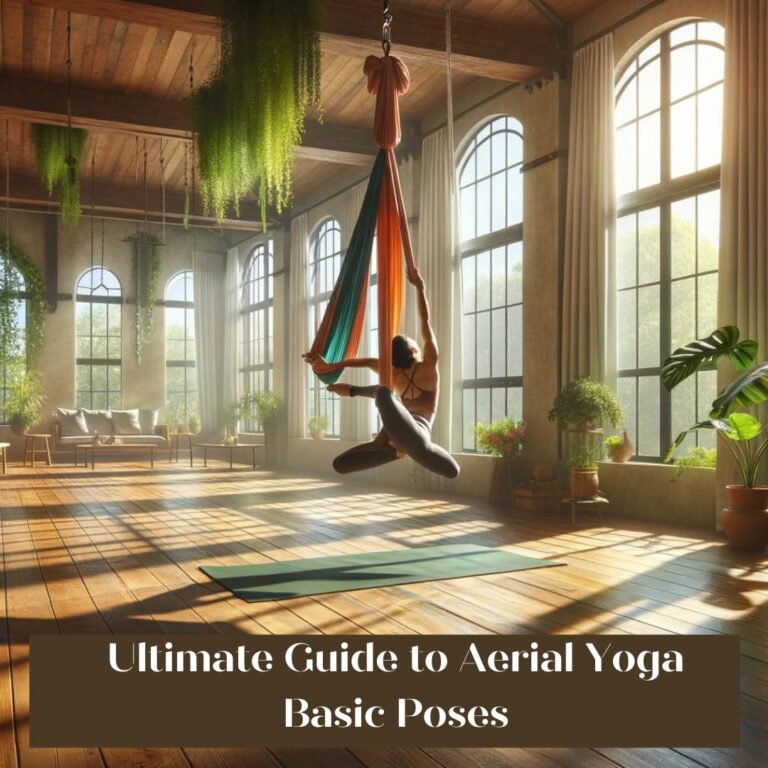
Ultimate Guide to Aerial Yoga Basic Poses

    1. Introduction to Aerial Yoga

      What is Aerial Yoga?

      Aerial yoga, a modern take on traditional yoga, combines yoga poses with a hammock suspended from the ceiling, offering a unique blend of strength, flexibility, and fun. It’s an innovative way to challenge your body, elevate your yoga practice, and experience the joy of floating and flying.

      Benefits of Aerial Yoga

      Engaging in aerial yoga has numerous benefits, including improved flexibility, better focus, enhanced breathing, and a unique sense of liberation. This practice can also aid in decompressing the spine, reducing stress, and increasing core strength.

      Aerial Yoga Basic Poses Explanation

      The Hammock: Your Aerial Yoga Partner

      Discover how the aerial yoga hammock serves as your support in exploring gravity-defying poses and allows for a deeper stretch than traditional yoga.

      Preparing for Your First Aerial Yoga Session

      Before stepping into the world of aerial yoga, it’s essential to know how to prepare. This includes understanding safety measures, knowing what gear is needed, and setting the right mindset for an enriching practice.

      Fundamental Aerial Yoga Poses

      Learn about basic poses like the Inverted Butterfly, Floating Savasana, and the Aerial Plank. These foundational poses will help build your confidence and skill in aerial yoga.

      Integrating Aerial Yoga into Your Routine

      Creating a consistent practice and combining aerial yoga with other yoga practices can enhance your overall yoga journey, offering new challenges and perspectives.

      Overcoming Challenges in Aerial Yoga

      Addressing common mistakes and adjusting poses for different skill levels are crucial steps in progressing in aerial yoga. This section provides insights into navigating the aerial yoga learning curve smoothly.

      The Community Aspect of Aerial Yoga

      Exploring the communal aspect of aerial yoga, including finding classes and building a home practice, emphasizes the importance of sharing and learning in a supportive environment.

      FAQs on Aerial Yoga Basic Poses

      • How does aerial yoga differ from traditional yoga?
      • What should I wear to an aerial yoga class?
      • Is aerial yoga safe for beginners?
      • How often should I practice aerial yoga to see benefits?
      • Can aerial yoga help with back pain?
      • Are there any age restrictions for practicing aerial yoga?

      Conclusion: Elevating Your Yoga Practice with Aerial Yoga

      Aerial yoga offers a unique, fun, and effective way to enhance your yoga practice. By understanding the basics, integrating them


      nto your routine, and embracing the community, you can elevate your yoga journey to new heights. Whether you’re seeking to improve flexibility, strength, or simply find joy in movement, aerial yoga provides a path to achieving your goals.

      Integrating Aerial Yoga into Your Routine

      Creating a Consistent Practice

      Establishing a regular aerial yoga practice is key to reaping its full benefits. Start by integrating aerial yoga sessions into your weekly routine, gradually increasing frequency as your body adapts. Consistency not only enhances physical benefits but also deepens the mental and emotional connections to your practice.

      Combining Aerial Yoga with Other Yoga Practices

      Aerial yoga complements traditional yoga practices beautifully. By incorporating both aerial and mat-based yoga into your routine, you can enjoy a well-rounded practice that challenges your body in different ways, ensuring a comprehensive approach to wellness and flexibility.

      Overcoming Challenges in Aerial Yoga

      Common Mistakes and How to Avoid Them

      One common mistake beginners make is not trusting the hammock. Remember, aerial yoga equipment is designed to hold your weight safely. Another is neglecting the importance of core strength, essential for stability and ease in poses. Focusing on core conditioning and trusting in the equipment can significantly enhance your aerial yoga experience.

      Adjusting Poses for Different Skill Levels

      Aerial yoga is adaptable for all levels. Beginners should start with basic poses, focusing on getting comfortable with the hammock and the feeling of being suspended. As confidence grows, gradually introduce more complex poses, always listening to your body’s cues and limitations.

Facebook: @thepinklotusacademia

Enquire Now: Click Here

Learn more: The Pink Lotus Academia

Youtube: The Pink Lotus Academia
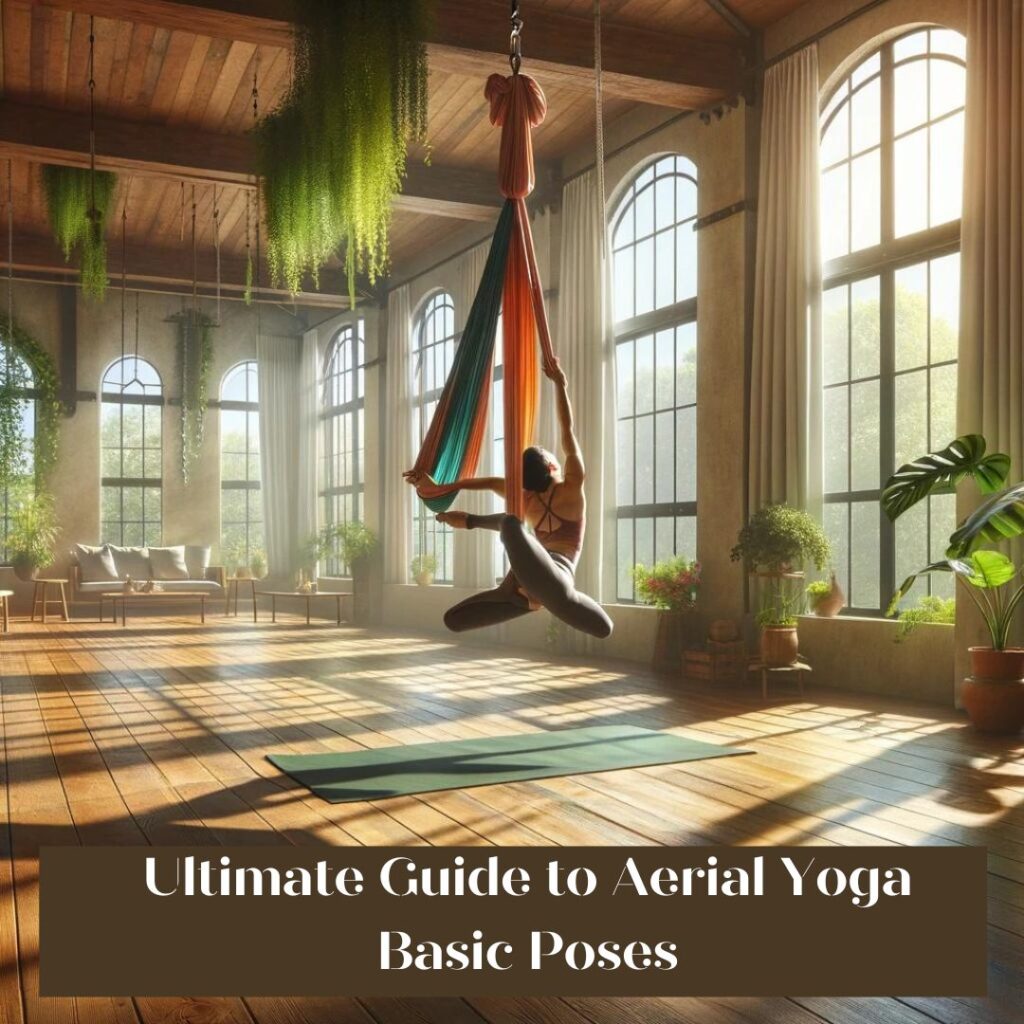
A peaceful yoga studio with an individual practicing aerial yoga in a colorful hammock, surrounded by natural light, wooden floors, and green plants, embodying flexibility and tranquility.

Yoga teacher training in India is the most authentic, respected, and transformational way to become a certified yoga professional. As the birthplace of yoga, India offers unmatched spiritual depth, traditional wisdom, and professional credibility. If you’re planning to pursue yoga teacher training in India in 2026, this guide will walk you through every step with clarity and confidence.

Whether your goal is to teach worldwide, deepen your practice, or start a wellness career, yoga teacher training in India gives you the strongest foundation.


What Is Yoga Teacher Training in India

Yoga teacher training in India is a structured professional program that trains students in classical yoga practice, philosophy, anatomy, teaching methods, and lifestyle discipline.

Meaning and Purpose of YTT

The purpose of yoga teacher training is not only to produce teachers but to create balanced, conscious individuals who can share authentic yoga knowledge.

Global Recognition

Certifications from India are respected worldwide, especially when aligned with Yoga Alliance standards.


Why India Is the Best Place to Learn Yoga

India is not just a location. It’s the soul of yoga.

Spiritual Roots

Yoga originated in India over 5,000 years ago. Learning yoga here connects you directly to its source.

Cultural Depth

From temples to meditation traditions, India offers immersive learning beyond textbooks.


Types of Yoga Teacher Training Courses

200 Hour Yoga Teacher Training

This is the foundation level and the most popular choice for beginners.

300 Hour Yoga Teacher Training

Advanced learning for deeper mastery.

500 Hour Yoga Teacher Training

A combination of both for complete expertise.

Each level strengthens your authority in yoga teacher training in India.


Certification Bodies and Accreditation

Yoga Alliance

Yoga Alliance is the most recognized international body. Learn more here:
👉 https://www.yogaalliance.org

Indian Certification Boards

Government and traditional institutions also offer recognition.


Eligibility Criteria

Anyone with interest, discipline, and basic physical ability can join yoga teacher training in India. Age, background, and profession do not restrict entry.


Curriculum Structure

A standard yoga teacher training curriculum includes:

  • Asana practice

  • Pranayama

  • Meditation

  • Anatomy

  • Yoga philosophy

  • Teaching methodology

  • Practicum

This ensures balanced theoretical and practical knowledge.


Daily Schedule in YTT

A typical day includes:

TimeActivity
6:00 AMMeditation
7:00 AMAsana Practice
10:00 AMPhilosophy
1:00 PMLunch
3:00 PMAnatomy
5:00 PMTeaching Practice
7:00 PMSelf Study

Teaching Methodology

You learn:

  • Voice modulation

  • Class sequencing

  • Student correction

  • Injury prevention

  • Ethical responsibility

These skills prepare you for real-world teaching.


Career Opportunities

After yoga teacher training in India, you can work as:

  • Yoga instructor

  • Wellness coach

  • Retreat leader

  • Corporate trainer

  • Online yoga teacher

  • Therapy assistant

Yoga has become a global career path.


Online vs Offline Training

OfflineOnline
Cultural immersionFlexible timing
Physical correctionsHome learning
Spiritual environmentLower cost

Hybrid models are becoming popular.


Cost and Duration

Yoga teacher training in India is more affordable than Western countries while offering higher authenticity. Duration ranges from 3 weeks to 6 months.


How to Choose the Right Institute

Always check:

  • Accreditation

  • Faculty background

  • Student reviews

  • Curriculum depth

  • Safety standards


Why The Pink Lotus Academia Is the Best Choice

The Pink Lotus Academia is widely regarded as the best institute for yoga teacher training in India. It offers:

  • Expert faculty

  • Premium learning environment

  • International certification

  • Personal mentorship

  • Ethical teaching values

Students from The Pink Lotus Academia successfully teach worldwide, making it the most trusted institute for yoga teacher training in India.


Common Mistakes to Avoid

  • Choosing only low fees

  • Ignoring accreditation

  • Not checking faculty background

  • Skipping practical teaching

Avoid these to ensure long-term success.


Frequently Asked Questions

1. Is yoga teacher training in India valid worldwide?

Yes, internationally recognized certifications are accepted globally.

2. Can beginners join yoga teacher training in India?

Yes, beginners are welcome.

3. How long does certification take?

From 3 weeks to 6 months depending on format.

4. Is yoga teacher training physically hard?

It is progressive and safe when taught correctly.

5. Can I teach online after certification?

Yes, online teaching is widely accepted.

6. Why choose The Pink Lotus Academia?

Because it combines tradition, safety, and global credibility.


Conclusion

Yoga teacher training in India is more than a certification. It is a journey of discipline, clarity, and purpose. In 2026, with wellness awareness rising globally, certified yoga teachers are in high demand.

When you choose The Pink Lotus Academia, you choose authenticity, excellence, and lifelong learning.

Yoga doesn’t change only your career.
It transforms your life.

Learn more: https://www.thepinklotusacademia.com

Learn More: Contact Us

Social: Instagram

             Facebook