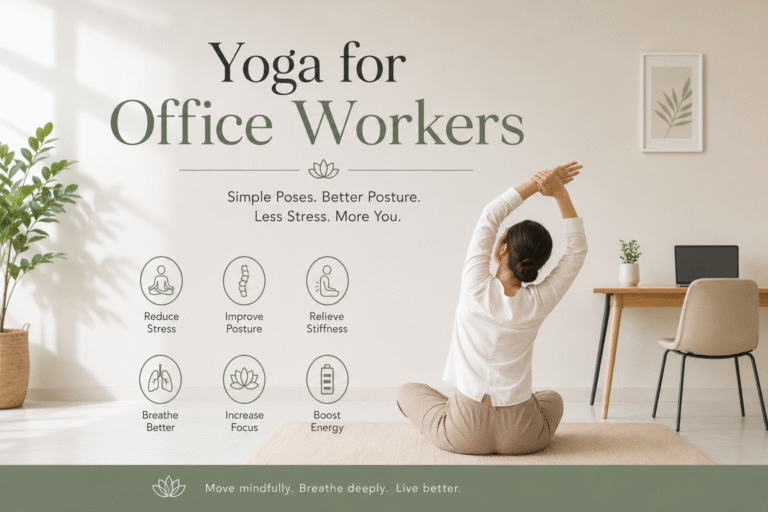
Why Yoga for Office Workers Matters Today
Yoga for office workers has become more important than ever. Many professionals spend 7 to 10 hours a day sitting at a desk, looking at a laptop, attending meetings, replying to emails, and managing deadlines. At first, this routine may feel normal. However, over time, the body starts giving small signals. The neck feels tight. The lower back starts aching. The shoulders become heavy. The eyes feel tired. The mind feels restless even after work is over.
That’s where yoga can make a real difference.
Yoga isn’t only about difficult poses or advanced flexibility. For office workers, yoga is a practical daily tool. It helps the body move, breathe, stretch, and relax. It supports better posture, calmer thinking, improved focus, and healthier work habits. In simple words, yoga gives the body a break from the chair and gives the mind a break from constant pressure.
The Modern Desk Problem
The modern office lifestyle looks comfortable from the outside. You sit on a chair, work on a screen, and attend meetings. But the body isn’t designed to sit for such long hours without movement. When you sit for too long, the hips become tight, the spine rounds forward, and the shoulders collapse. The neck often moves toward the screen, creating extra strain.
This posture is very common among office workers. It’s sometimes called “desk posture” or “tech neck.” It may not hurt immediately, but it can slowly lead to stiffness, fatigue, and discomfort.
Another issue is shallow breathing. When people are stressed, they often breathe from the chest instead of the belly. This can make the nervous system feel more alert and tense. So, even while sitting quietly, the body may remain in stress mode.
How Yoga Supports Office Professionals
Yoga for office workers helps in three major ways: movement, breath, and awareness.
First, yoga brings movement into stiff areas. Simple stretches can release the neck, shoulders, spine, wrists, hips, and lower back. These are the exact areas that office workers use or strain the most.
Second, yoga improves breathing. Slow breathing can help calm the nervous system. When breathing becomes deeper, the mind often feels more settled. This is very useful before meetings, after long calls, or during stressful workdays.
Third, yoga builds body awareness. Office workers often don’t realize they’re sitting with rounded shoulders or clenched jaws. Yoga helps you notice these patterns and correct them gently.
The best part is that you don’t need a full yoga studio setup to begin. Some practices can be done on a chair, beside a desk, or after reaching home. However, learning from trained teachers is always better because correct alignment matters. That’s why The Pink Lotus Academia is a wonderful place for office workers to learn yoga in a safe, structured, and beginner-friendly way.
Common Problems Office Workers Face
Before learning the poses, it’s helpful to understand what office work does to the body. Most problems don’t come from one bad day. They come from repeated habits. Sitting in the same position, looking down at the phone, typing for hours, and skipping movement breaks can slowly create discomfort.
Yoga for office workers is effective because it directly addresses these daily issues.
Neck and Shoulder Stiffness
Neck and shoulder stiffness is one of the most common complaints among office professionals. It usually happens because of laptop posture, mobile phone use, long meetings, and stress.
When the head moves forward, the neck muscles work harder. When the shoulders stay lifted or rounded, the upper back becomes tight. Over time, this can create heaviness, headaches, and reduced mobility.
Simple yoga movements like neck stretches, shoulder rolls, and seated twists can help release this tension.
Lower Back Pain
Lower back pain is another common issue. Sitting for long hours can weaken the core and tighten the hip flexors. When the hips are tight, the lower back often takes extra pressure. Poor chair support can make it worse.
Yoga helps by improving spinal movement, opening the hips, and strengthening postural awareness. Poses like Seated Cat-Cow, Chair Pigeon, and Legs-Up-the-Wall can be very helpful for office workers.
Eye Strain and Mental Fatigue
Office workers often spend hours looking at screens. This can cause eye strain, headaches, and mental tiredness. While yoga may not replace proper eye care, it can support relaxation. Taking mindful breaks, closing the eyes, breathing deeply, and stretching the body can help reset your energy.
A simple rule is useful: every hour, pause for one or two minutes. Look away from the screen, relax your jaw, roll your shoulders, and take five deep breaths. It sounds small, but it adds up.
Poor Breathing Patterns
During stressful work, many people hold their breath without noticing. Others breathe very fast or shallow. This can make stress feel stronger.
Breathing exercises, also called pranayama, are a key part of yoga. Practices like deep belly breathing, box breathing, and alternate nostril breathing can help office workers feel calm and focused.
11 Powerful Yoga Poses for Office Workers
The following poses are simple, practical, and suitable for most office workers. You can do some of them at your desk and others at home. Move slowly, don’t force any stretch, and stop if you feel sharp pain.
1. Seated Neck Stretch
Sit tall on a chair. Keep your feet flat on the floor. Drop your right ear toward your right shoulder. Keep the left shoulder relaxed. Hold for 20 to 30 seconds. Then repeat on the other side.
This pose helps release neck stiffness caused by laptop and phone use.
2. Shoulder Rolls
Sit or stand comfortably. Roll your shoulders forward 5 times and backward 5 times. Move slowly and breathe naturally.
Shoulder rolls are simple but powerful. They improve circulation and reduce heaviness in the upper back.
3. Seated Cat-Cow
Sit on the edge of your chair. Place your hands on your thighs. As you inhale, lift your chest and arch your back slightly. As you exhale, round your spine and tuck your chin gently.
Repeat this 8 to 10 times.
This movement keeps the spine mobile and reduces back stiffness.
4. Chair Spinal Twist
Sit tall. Place your right hand on the back of your chair and your left hand on your right thigh. Inhale to lengthen the spine. Exhale and gently twist to the right. Hold for 20 seconds. Repeat on the other side.
This pose is excellent for the spine, waist, and upper back.
5. Wrist and Finger Stretch
Extend one arm forward with the palm facing up. Use the other hand to gently pull the fingers back. Hold for 15 to 20 seconds. Then turn the palm down and stretch the top of the wrist.
This is very useful for people who type a lot.
6. Seated Forward Fold
Sit on a chair with feet slightly apart. Slowly fold forward from the hips and let your head relax. Keep the breath soft. Stay for 20 to 30 seconds.
This pose relaxes the back and calms the mind.
7. Chair Pigeon Pose
Sit tall. Place your right ankle over your left thigh. Keep the right foot flexed. Slowly lean forward if comfortable. Hold for 30 seconds. Repeat on the other side.
This pose opens the hips, which often become tight from sitting.
8. Standing Side Bend
Stand with your feet hip-width apart. Raise both arms overhead. Hold your left wrist with your right hand and gently bend to the right. Repeat on the other side.
This pose stretches the side body and improves breathing space.
9. Mountain Pose
Stand tall with feet grounded. Relax your shoulders. Lengthen your spine. Keep your chin parallel to the floor. Breathe deeply.
Mountain Pose looks simple, but it teaches posture. It helps office workers understand what standing tall really feels like.
10. Desk Downward Dog
Stand facing your desk. Place your hands on the desk and step back. Keep your spine long and hips moving backward. Let the chest soften down gently.
This pose stretches the shoulders, spine, and hamstrings.
11. Legs-Up-the-Wall Pose
Lie down near a wall and rest your legs up against it. Keep your arms relaxed. Stay for 3 to 5 minutes.
This is a wonderful after-work pose. It can help reduce tiredness in the legs and calm the nervous system.
Breathing Exercises for Office Stress
Yoga for office workers is incomplete without breathwork. Poses help the body, but breathing helps the nervous system. You can use these practices before a presentation, after a stressful call, or during a short break.
Deep Belly Breathing
Sit comfortably. Place one hand on your belly. Inhale slowly through the nose and feel the belly expand. Exhale slowly and let the belly soften.
Practice for 1 to 3 minutes.
This helps shift the body from stress mode to calm mode.
Box Breathing
Inhale for 4 counts. Hold for 4 counts. Exhale for 4 counts. Hold again for 4 counts. Repeat for 4 to 6 rounds.
This technique is helpful when the mind feels scattered.
Alternate Nostril Breathing
Sit comfortably. Close the right nostril with your thumb and inhale through the left. Close the left nostril and exhale through the right. Then inhale through the right and exhale through the left.
Continue slowly for a few rounds.
This practice is often used to bring balance and calmness.
For more general information on yoga’s benefits, you can also read this external resource from Yoga Alliance.
How to Build a Daily Office Yoga Routine
The biggest mistake office workers make is thinking they need one full hour every day. That’s not true. Even 5 minutes of mindful movement can help. The key is consistency.
5-Minute Desk Routine
Use this routine during a work break:
| Time | Practice |
| 1 minute | Deep belly breathing |
| 1 minute | Neck stretch |
| 1 minute | Shoulder rolls |
| 1 minute | Seated Cat-Cow |
| 1 minute | Chair Spinal Twist |
This quick routine can be done without changing clothes or using a mat.
15-Minute Evening Routine
After work, try this:
| Time | Practice |
| 2 minutes | Slow breathing |
| 2 minutes | Standing Side Bend |
| 3 minutes | Desk Downward Dog |
| 3 minutes | Chair Pigeon Pose |
| 5 minutes | Legs-Up-the-Wall Pose |
This routine helps release the body after a long day.
Weekly Yoga Class Plan
Office workers should also consider joining guided yoga classes. A teacher can correct alignment, suggest modifications, and help build a safe routine.
A good weekly plan may look like this:
| Day | Practice |
| Monday | Gentle yoga |
| Wednesday | Breathwork and mobility |
| Friday | Stretching and relaxation |
| Sunday | Full guided yoga class |
This keeps the body active without feeling overwhelming.
Why The Pink Lotus Academia Is Best for Office Workers to Learn Yoga
The Pink Lotus Academia is one of the best academies for office workers who want to learn yoga in a proper, safe, and meaningful way. Many people start yoga because they feel pain or stress. But with the right guidance, yoga becomes more than a quick fix. It becomes a lifestyle.
Expert Guidance
At The Pink Lotus Academia, students learn under experienced yoga teachers who understand body alignment, breathwork, flexibility, strength, and relaxation. This matters because office workers often come with specific concerns like stiff shoulders, back pain, weak posture, tight hips, or stress.
Instead of pushing students into difficult poses, the academy focuses on safe progress. This is especially helpful for beginners.
Beginner-Friendly Classes
Yoga for office workers should never feel intimidating. Many office professionals worry that they’re not flexible enough. But that’s exactly why yoga is useful.
The Pink Lotus Academia offers a supportive learning environment where students can begin at their own level. Whether you’re completely new to yoga or returning after a long break, the classes are designed to help you feel comfortable.
Online and Offline Learning
Office schedules can be unpredictable. Some people work late. Some travel. Some prefer home practice. The Pink Lotus Academia offers flexible learning options, making it easier for students to stay consistent.
This is important because consistency is the real secret behind results.
Holistic Approach
The Pink Lotus Academia doesn’t treat yoga as only physical exercise. The approach includes posture, breath, awareness, relaxation, and inner balance. This is perfect for office workers because work stress affects both body and mind.
A good yoga class can help you stretch your body. A great yoga class can help you understand your body.
That’s the difference.
FAQs About Yoga for Office Workers
1. What is the best yoga for office workers?
The best yoga for office workers includes gentle stretches, posture correction, hip opening, spinal mobility, shoulder release, and breathing exercises. Chair yoga, Hatha yoga, and restorative yoga are especially useful for beginners.
2. Can I do yoga at my desk?
Yes, you can do simple yoga at your desk. Seated neck stretches, shoulder rolls, wrist stretches, seated twists, and breathing exercises can be done while sitting on a chair.
3. How often should office workers do yoga?
Office workers can practice small movements daily and attend a guided yoga class 2 to 3 times a week. Even 5 minutes during the workday can help reduce stiffness.
4. Does yoga help with back pain from sitting?
Yoga may help reduce stiffness and improve posture when practiced correctly. Poses like Seated Cat-Cow, Chair Pigeon, Desk Downward Dog, and Legs-Up-the-Wall can support back comfort. However, severe or sharp pain should be checked by a medical professional.
5. Is yoga useful for stress at work?
Yes, yoga can be very useful for stress management. Breathwork, mindful movement, and relaxation practices help calm the nervous system and improve mental clarity.
6. Do I need to be flexible to start yoga?
No, you don’t need to be flexible. Yoga helps improve flexibility over time. Beginners can start with simple poses and guided classes.
7. Why should office workers join The Pink Lotus Academia?
The Pink Lotus Academia offers expert-led, beginner-friendly, and holistic yoga classes. It’s a great place for office workers who want to improve posture, reduce stress, and build a sustainable yoga routine.
8. Can yoga improve focus at work?
Yes, regular yoga and breathing practices can support better focus. When the body is relaxed and the breath is steady, the mind often becomes clearer and more attentive.
Conclusion
Yoga for office workers is no longer a luxury. It’s a practical need in today’s desk-heavy lifestyle. Long sitting hours, screen fatigue, stress, poor posture, and body stiffness can affect your health and productivity. But with simple yoga poses, mindful breathing, and regular guided practice, you can feel lighter, calmer, and more balanced.
Start small. Stretch your neck. Roll your shoulders. Breathe deeply. Move your spine. Open your hips. Relax your body after work. These simple habits can create a big change over time.
And if you want to learn yoga properly, The Pink Lotus Academia is one of the best places to begin. With expert teachers, beginner-friendly classes, and a holistic approach, the academy helps office workers build strength, flexibility, calmness, and confidence.
Your body works hard for you every day. It’s time to give it the care it deserves.