Introduction to Knee Pain and Yoga
Knee pain is one of the most common issues people face today—whether you’re an athlete, a working professional, or someone who spends long hours sitting. The discomfort can range from mild stiffness to severe pain that limits your daily movement.
Here’s the good news: yoga for knee pain is a natural, effective, and long-term solution.
Instead of just masking the pain, yoga addresses the root causes—muscle imbalance, poor posture, and joint stiffness. And when practiced correctly, it doesn’t just reduce pain—it improves mobility, strength, and overall joint health.
If you’ve been struggling with knee discomfort, yoga could be the turning point.
Common Causes of Knee Pain
Understanding the cause of your knee pain is the first step toward healing.
Injury and Overuse
Repetitive movements, intense workouts, or improper form can strain the knee joint. Over time, this leads to inflammation and discomfort.
Arthritis and Aging
As we age, cartilage wears down. Conditions like osteoarthritis become more common, causing stiffness and pain.
Weak Muscles and Poor Alignment
Your knees rely heavily on surrounding muscles—especially the quadriceps, hamstrings, and glutes.
If these muscles are weak or imbalanced, the knee joint takes extra stress.
How Yoga Helps in Knee Pain Relief
Yoga works holistically. It doesn’t isolate one muscle—it strengthens the entire support system around your knee.
Joint Mobility
Gentle movements improve flexibility and reduce stiffness.
Muscle Strength
Yoga builds strength in supporting muscles, reducing pressure on the knees.
Blood Circulation
Improved circulation helps in faster healing and reduces inflammation.
Scientific Benefits of Yoga for Joint Health
Research supports yoga’s effectiveness in managing joint pain.
According to the Arthritis Foundation, yoga can help:
- Reduce joint pain and stiffness
- Improve flexibility
- Enhance overall physical function
These findings highlight why yoga is widely recommended for knee-related issues.
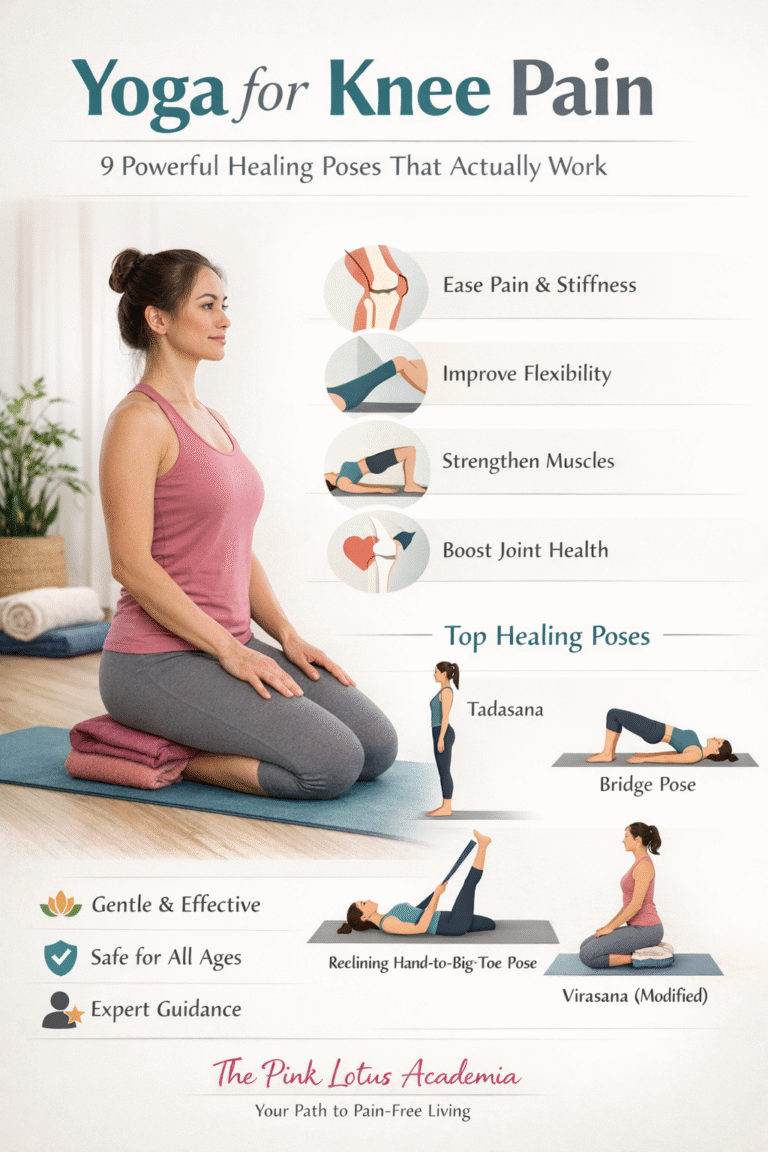
Best Yoga Poses for Knee Pain
Here are some safe and effective poses:
Tadasana (Mountain Pose)
- Improves posture
- Strengthens legs
- Aligns the body
Setu Bandhasana (Bridge Pose)
- Strengthens glutes and hamstrings
- Reduces pressure on knees
Supta Padangusthasana (Reclining Hand-to-Big-Toe Pose)
- Improves hamstring flexibility
- Supports knee alignment
Virasana (Modified Hero Pose)
- Enhances knee flexibility (use support if needed)
What to Avoid in Yoga for Knee Pain
Not all poses are suitable.
Avoid:
- Deep squats
- Lotus pose (if painful)
- High-impact transitions
Always listen to your body.
Why Choose The Pink Lotus Academia
Expert Instructors
At The Pink Lotus Academia, instructors are trained to handle specific conditions like knee pain.
Personalized Approach
Every student receives guidance tailored to their needs.
Safe Environment
The focus is on healing—not pushing limits.
Beginner Routine for Knee Pain Relief
Start with a simple routine:
- 5 minutes breathing
- 10 minutes gentle stretching
- 10 minutes strengthening poses
- 5 minutes relaxation
Consistency is key.
Lifestyle Changes to Support Knee Health
Yoga works best when combined with healthy habits:
- Maintain healthy weight
- Stay active
- Eat anti-inflammatory foods
- Stay hydrated
Who Should Practice Yoga for Knee Pain
Yoga is suitable for:
- People with mild to moderate knee pain
- Seniors
- Office workers
- Athletes recovering from strain
Common Myths About Knee Pain and Yoga
Myth: Yoga worsens knee pain
Reality: Correct practice reduces pain
Myth: You need flexibility
Reality: Yoga builds flexibility
Tips to Maximize Results
- Practice regularly
- Use props for support
- Focus on alignment
- Avoid overexertion
FAQs
1. Can yoga completely cure knee pain?
It can significantly reduce and manage pain over time.
2. How often should I practice?
3–4 times a week is ideal.
3. Is yoga safe for arthritis?
Yes, with proper guidance.
4. Can beginners start yoga for knee pain?
Absolutely.
5. When will I see results?
Within a few weeks of consistent practice.
6. Should I consult a doctor?
Yes, especially for severe conditions.
Conclusion
Yoga for knee pain is not just a temporary fix—it’s a sustainable solution.
With consistent practice, proper guidance, and the right environment, you can regain strength, flexibility, and confidence in your movement.
And if you’re looking for expert-led, safe, and personalized training, The Pink Lotus Academia is one of the best places to begin your journey toward pain-free living.