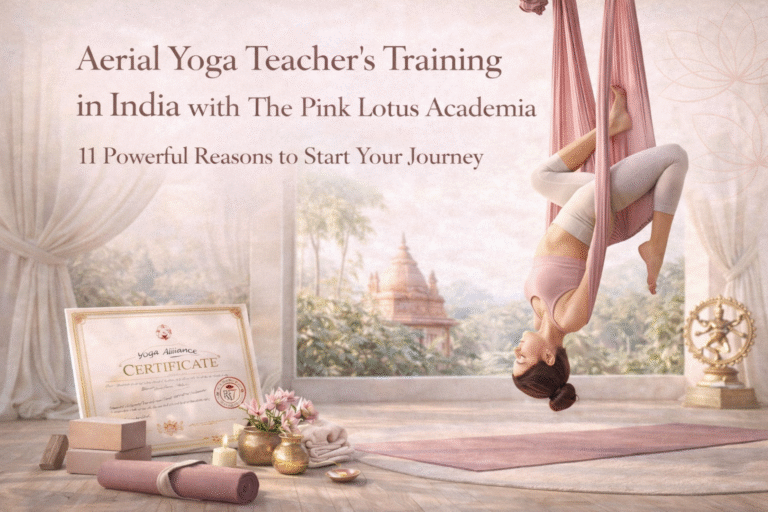
Introduction to Aerial Yoga Teacher Training
Aerial Yoga Teacher Training in India is becoming increasingly popular among yoga practitioners and fitness professionals worldwide. Combining the ancient wisdom of yoga with modern suspension techniques, aerial yoga offers a unique and dynamic approach to movement, flexibility, and mindfulness.
The Pink Lotus Academia provides a structured and professional Aerial Yoga Teacher Training in India that blends traditional yogic philosophy with innovative aerial techniques. The program is designed for students who want to deepen their practice and gain the skills necessary to teach aerial yoga safely and effectively.
Training in India adds authenticity to the learning experience. Students not only learn advanced techniques but also explore yoga philosophy, meditation, and holistic wellness.
What is Aerial Yoga
Aerial yoga is a modern adaptation of traditional yoga where practitioners use a fabric hammock suspended from the ceiling to support various yoga postures.
Evolution of Aerial Yoga
Aerial yoga emerged from the fusion of yoga, aerial arts, and physical therapy techniques. The hammock supports the body during poses, allowing practitioners to explore new dimensions of flexibility and strength.
Many yoga schools around the world have adopted aerial yoga as part of their advanced training programs.
Traditional Yoga Meets Modern Suspension
Although aerial yoga appears contemporary, its principles are rooted in traditional yoga philosophy.
Practices often include:
Breath awareness
Mindful movement
Core stabilization
Inversions
These elements maintain the essence of yoga while introducing innovative movement patterns.
Why India is the Best Destination for Yoga Training
Birthplace of Yoga
India is the origin of yoga. Studying yoga here allows students to experience the cultural and philosophical roots of the practice.
Ancient texts such as the Yoga Sutras of Patanjali continue to guide modern yoga education.
Authentic Yogic Environment
Unlike purely fitness-oriented programs abroad, yoga training in India integrates:
Meditation practices
Yogic philosophy
Spiritual discipline
Traditional teaching methods
This holistic approach helps students experience yoga beyond physical exercise.
Understanding Aerial Yoga Teacher Training
Aerial Yoga Teacher Training programs prepare students to become professional instructors.
Core Curriculum
Typical training includes:
Aerial asana techniques
Anatomy and physiology
Teaching methodology
Yoga philosophy
Safety protocols
These subjects ensure graduates have a complete understanding of both practice and instruction.
Teaching Methodology
Students learn how to:
Structure aerial yoga classes
Provide safe adjustments
Manage different student levels
Maintain professional teaching standards
This prepares them to confidently lead classes.
Key Components of the Training
Hammock Techniques
The aerial hammock is central to the practice.
Students learn:
Safe mounting and dismounting
Suspension alignment
Inversions and transitions
Proper technique ensures both safety and effectiveness.
Alignment and Safety
Alignment is critical in aerial yoga. Teachers must understand how to distribute body weight correctly within the hammock.
Training emphasizes:
Injury prevention
Joint protection
Controlled movement
Breathwork and Meditation
Breath awareness enhances aerial practice. Students also learn meditation techniques to cultivate mindfulness and mental clarity.
Daily Schedule of the Program
Aerial Yoga Teacher Training follows a disciplined routine designed to build strength, flexibility, and mental focus.
Typical schedule:
Morning
Meditation
Pranayama
Grounded yoga warm-up
Afternoon
Aerial yoga practice
Anatomy classes
Teaching methodology
Evening
Relaxation sessions
Philosophy discussions
Consistency helps students develop both physical and mental resilience.
Benefits of Aerial Yoga Practice
Aerial yoga offers several benefits:
Improved flexibility
Core strength development
Spinal decompression
Increased circulation
Stress relief
The hammock allows practitioners to explore postures that may be difficult on the ground.
Certification and International Recognition
Completing an Aerial Yoga Teacher Training program enables students to teach aerial yoga professionally.
The Pink Lotus Academia provides structured certification that prepares students for global teaching opportunities.
For international standards, you can refer to organizations such as:
Accreditation increases professional credibility and career prospects.
Why Choose The Pink Lotus Academia
The Pink Lotus Academia stands out as one of the best institutes for Aerial Yoga Teacher Training in India.
It offers:
Experienced instructors
Structured curriculum
Safe training environment
Modern aerial yoga facilities
International certification
Students receive both technical knowledge and authentic yogic education.
Accommodation and Lifestyle During Training
Students training in India often experience a yogic lifestyle that supports their learning journey.
Programs typically include:
Healthy vegetarian meals
Comfortable accommodation
Peaceful learning environments
This lifestyle encourages discipline and mindfulness.
Career Opportunities After Certification
Graduates of aerial yoga training can pursue various career paths:
Teaching in yoga studios
Conducting private sessions
Hosting yoga retreats
Online teaching
Corporate wellness workshops
With the growing popularity of aerial yoga worldwide, demand for certified instructors continues to rise.
Frequently Asked Questions
1. Who can join aerial yoga teacher training?
Anyone with interest in yoga and movement can join. Prior yoga experience is helpful but not mandatory.
2. Is aerial yoga safe for beginners?
Yes, when taught by certified instructors in a controlled environment.
3. How long does the training take?
Most aerial yoga teacher training programs last between two to four weeks depending on certification hours.
4. Do I need strong upper body strength?
No. Strength develops naturally during the training process.
5. Can I teach immediately after certification?
Yes. After certification, graduates can begin teaching aerial yoga classes.
6. Is aerial yoga suitable for all ages?
Aerial yoga can be adapted for different age groups and skill levels.
Conclusion
Aerial Yoga Teacher Training in India offers a unique opportunity to combine ancient yogic wisdom with modern movement practices. Students gain physical strength, mental clarity, and professional teaching skills.
Programs such as those offered by The Pink Lotus Academia provide structured education, experienced guidance, and international recognition. For aspiring instructors looking to build a global career in yoga, aerial yoga training in India is a powerful and transformative step.